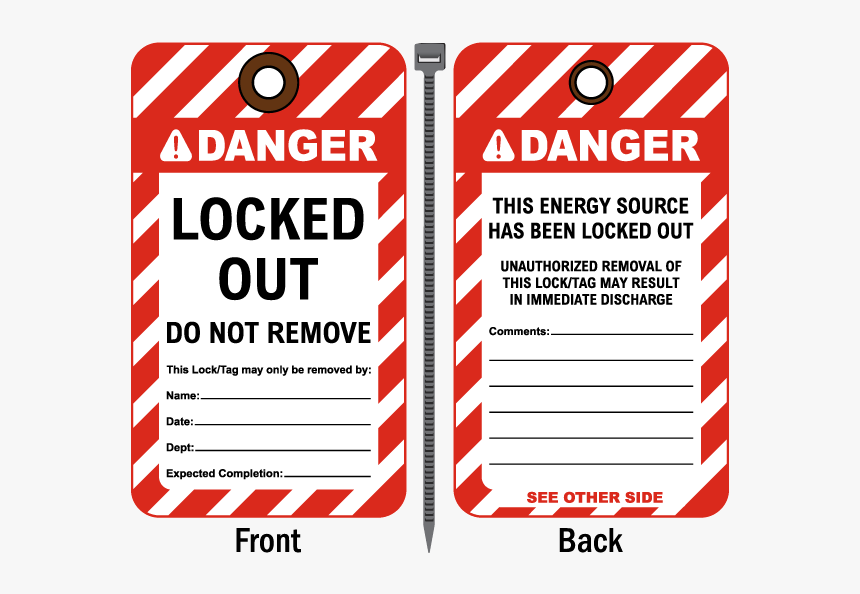
Every year, workers are injured or killed during servicing and maintenance because machines start unexpectedly. The root cause? A failed or skipped lockout tagout (LOTO) procedure. An OSHA lockout tagout toolbox talk isn’t just another safety meeting—it’s a frontline defense against preventable tragedies.
These brief, focused discussions reinforce the protocols that protect maintenance crews, machine operators, and electricians from hazardous energy. Done right, they bridge the gap between policy and practice. Done poorly, they become box-checking rituals that leave workers vulnerable.
This guide cuts through the noise. You’ll learn how to run effective LOTO toolbox talks, avoid common pitfalls, and ensure your team actually retains and applies critical safety knowledge.
What Is a Lockout Tagout Toolbox Talk?
A lockout tagout toolbox talk is a short safety meeting—typically 10 to 15 minutes—focused on one aspect of energy control procedures. It’s called a “toolbox talk” because it’s designed to be delivered where the work happens: near equipment, on the shop floor, or beside a maintenance bay.
Unlike formal training, these talks are conversational. They’re meant to remind, clarify, and engage workers about real risks in their daily routines.
Key Components of an Effective LOTO Toolbox Talk
- Clear objective: Focus on one topic (e.g., lock application, group LOTO, tag limitations).
- Real equipment reference: Use nearby machinery as examples.
- Worker participation: Invite questions, share near-miss stories.
- Visual aids: Show locks, tags, hasps, or printouts of the energy control plan.
- Documentation: Sign-in sheet to confirm attendance and topic covered.
Example: Instead of saying “Lockout is important,” try: “Last week in Ohio, a mechanic reached into a conveyor system that wasn’t properly locked out. The motor cycled automatically during testing. He lost two fingers. Let’s talk about how that could’ve been prevented with a group LOTO procedure.”
That kind of real-world context transforms a routine briefing into a memorable safety intervention.
Why OSHA Requires LOTO Awareness—and How Toolbox Talks Fit In
OSHA standard 29 CFR 1910.147 mandates a comprehensive control of hazardous energy program. While formal training is required annually, OSHA also emphasizes “periodic inspections” and ongoing communication—this is where toolbox talks come in.
OSHA doesn’t explicitly require toolbox talks, but they are a recognized best practice for maintaining compliance and reinforcing training. In fact, during an OSHA audit, inspectors may ask:
- How often do employees receive refresher training?
- Are there documented discussions about LOTO procedures?
- Can workers explain their role in energy isolation?
Toolbox talks serve as evidence of continuous safety engagement. They demonstrate that your organization doesn’t just check compliance boxes—it builds a culture where safety is spoken, not just posted.
Inspection Tip: OSHA requires that each energy control procedure be inspected at least annually, with both the authorized employee and an affected worker involved. Use this moment to launch a follow-up toolbox talk: “Here’s what we found in last month’s audit—and how we’re fixing it.”
Common LOTO Mistakes That Toolbox Talks Can Prevent
Even experienced teams make dangerous assumptions. These are among the most frequent—and preventable—LOTO errors:

1. Skipping Lockout for “Quick Repairs” Workers often rationalize bypassing LOTO because a task “only takes 30 seconds.” But that’s how amputations happen.
Toolbox Talk Fix: Drill this message: No job is too small to lock out. Use a real incident example to show how a “fast fix” led to injury.
2. Using Tags Without Locks Tags are warnings, not physical restraints. A tag alone won’t stop a valve from being turned.
Toolbox Talk Fix: Demonstrate a lock vs. a tag. Emphasize: “If it can be locked, it must be locked.”
3. Failure to Isolate All Energy Sources Machines often have multiple energy types: electrical, pneumatic, hydraulic, thermal, gravitational.
Toolbox Talk Fix: Pick a machine in your facility. Walk through each energy source. Ask: “What could go wrong if we miss one?”
4. Poor Communication During Group Lockout In team maintenance, if one worker removes their lock too early, catastrophe follows.
Toolbox Talk Fix: Review the “last-on, first-off” rule. Use a checklist: Who applies locks? Who verifies isolation? Who removes them?
5. Inadequate Training for Contract Workers Contractors may not know your LOTO procedures—or assume yours match theirs.
Toolbox Talk Fix: Address contractor integration. Require a safety orientation and joint LOTO review before any work begins.
How to Run an Effective LOTO Toolbox Talk: A Step-by-Step Approach
You don’t need a PowerPoint or a conference room. You do need focus, clarity, and engagement.
Step 1: Choose a Specific Topic Avoid broad themes like “LOTO basics.” Instead, drill into:
- Verifying zero energy
- Using lockout hasps for multiple workers
- Handling shift changes during ongoing maintenance
- Dealing with stored energy (springs, capacitors, elevated loads)
Step 2: Prepare in Advance Even short talks require prep. Gather:
- Relevant equipment manuals
- Sample locks and tags
- Photos of real incidents (redacted)
- A 3-5 point discussion outline
Step 3: Deliver On-Site Go where the risk lives. Stand near the machine. Point to actual lock points. Ask questions:
- “Where’s the disconnect on this press?”
- “Could residual pressure build up here?”
- “Who’s responsible for re-energizing?”
Step 4: Encourage Participation Let workers share experiences. Ask: “Has anyone here seen a close call during maintenance?” Real stories stick longer than lectures.
Step 5: Document the Talk Keep a simple log:
| Date | Topic | Facilitator | Attendees (Signatures) | Location |
|---|---|---|---|---|
| 4/5 | Verifying Zero Energy | J. Smith | A. Lee, M. Tran, R. Kim | Press Room |
This log is invaluable during audits and incident investigations.
Sample LOTO Toolbox Talk: Verifying Zero Energy
Topic: Confirming machines are truly de-energized before work begins Duration: 12 minutes Location: Near CNC machining center
Discussion Points:
- Why verification matters:
- “A machine can look off but still hold lethal voltage. Always test before touch.”
- The three-step verification process:
- - Shut down the machine using the normal stop button.
- - Isolate energy sources (flip disconnect, close valves).
- - Use a tester to confirm zero energy at the point of contact.
- Common mistakes:
- - Testing only at the control panel (not the actual circuit).
- - Assuming a tripped breaker means no power.
- - Using an untested voltage meter.

- Hands-on demo:
- Show how to safely test a control circuit with a multimeter. Emphasize PPE: insulated gloves, safety glasses.
- Group discussion:
- “What would you do if your meter shows voltage after lockout?” Accept answers, then reinforce procedure: Do not proceed. Report issue. Recalculate isolation points.
- Closing reminder:
- “If you didn’t test it, you don’t know it’s safe. Always verify.”
When and How Often Should You Hold LOTO Toolbox Talks?
Frequency depends on risk level and workforce changes, but a solid baseline is:
- Monthly for high-risk environments (manufacturing, processing, utilities)
- Quarterly for lower-risk facilities with stable teams
- After any incident or near-miss involving machinery
- After equipment upgrades or new installations
- When new hires join or contractors arrive
More importantly: timing matters. Avoid holding talks at shift start when workers are rushing. Better times:
- Mid-morning, after warm-up tasks
- During planned maintenance windows
- Before beginning a complex repair
And never hold them during meal breaks or overtime—this signals that safety is a burden, not a priority.
Integrating Toolbox Talks Into Your Safety Culture
A one-off talk has limited impact. The goal is integration—making LOTO awareness part of daily operations.
Practical Integration Tips:
- Assign rotating facilitators: Let senior technicians lead talks. It builds ownership and surfaces frontline insights.
- Link to Permit Systems: Before issuing a work permit, require proof of a recent LOTO talk.
- Use Visual Triggers: Post mini-checklists near lockout stations: “Did you verify? Did you tag? Did you test?”
- Track Participation: Monitor attendance trends. Low turnout signals disengagement—investigate why.
- Follow Up: If a talk covers valve isolation, spot-check a few jobs later in the week: “Show me how you locked this out.”
Reality Check: A perfect LOTO procedure on paper means nothing if workers skip steps during night shifts. Toolbox talks keep the standard visible, verbal, and verified.
Real-World Example: How a Toolbox Talk Prevented a Serious Injury
At a Midwest food processing plant, a maintenance team was scheduled to replace a gearbox on a mixer. The day before, a supervisor held a LOTO toolbox talk focused on stored mechanical energy.
During the talk, a technician mentioned, “I once saw a spring release when we loosened the housing—sent a cover flying.”
That prompted the team to review the service manual. They discovered a hidden torsion spring designed to assist mixing blade movement.
Because of the talk, they added a step: mechanically block the spring before disassembly.
When they opened the unit, the spring released with violent force—but the block held. No one was hurt.
This wasn’t luck. It was the result of a well-timed, relevant toolbox talk that triggered critical thinking.
Closing: Make Every LOTO Toolbox Talk Count
An OSHA lockout tagout toolbox talk should never be routine. It should be sharp, specific, and rooted in real risk.
Forget generic lectures. Focus on one hazard. Use real equipment. Invite stories. Verify understanding.
Do this monthly, document it, and tie it to actual work. Over time, you’ll see fewer shortcuts, more questions, and a workforce that treats LOTO not as a chore, but as a lifeline.
Start tomorrow: Pick one machine. Gather three workers. Talk about one lock point. That’s how culture changes—one conversation at a time.
Frequently Asked Questions
What should be included in a lockout tagout toolbox talk? Focus on a single LOTO topic—like verifying zero energy or group lockout. Include real equipment examples, visual aids, and encourage worker participation.
How long should a LOTO toolbox talk last? Aim for 10 to 15 minutes. Long enough to cover a topic in depth, short enough to hold attention.
Do toolbox talks replace formal LOTO training? No. They supplement annual OSHA-mandated training by reinforcing knowledge and addressing real-time concerns.
Who should lead a LOTO toolbox talk? Supervisors, safety officers, or experienced technicians. Rotate leaders to build broader engagement.
Should toolbox talks be documented? Yes. Keep a log with date, topic, attendees, and location. This supports compliance and accountability.
Can you use the same toolbox talk topic multiple times? Yes, but vary the context. Revisit topics annually, but tie them to new incidents, equipment, or seasonal risks.
Are toolbox talks required by OSHA? Not explicitly, but they demonstrate ongoing safety communication, which OSHA expects under 29 CFR 1910.147.
FAQ
What should you look for in OSHA Lockout Tagout Toolbox Talk Essentials? Focus on relevance, practical value, and how well the solution matches real user intent.
Is OSHA Lockout Tagout Toolbox Talk Essentials suitable for beginners? That depends on the workflow, but a clear step-by-step approach usually makes it easier to start.
How do you compare options around OSHA Lockout Tagout Toolbox Talk Essentials? Compare features, trust signals, limitations, pricing, and ease of implementation.
What mistakes should you avoid? Avoid generic choices, weak validation, and decisions based only on marketing claims.
What is the next best step? Shortlist the most relevant options, validate them quickly, and refine from real-world results.