Every year, hundreds of workers suffer serious injuries—or worse—because machinery was accidentally energized during maintenance. These incidents aren’t just tragic; they’re preventable. At the heart of that prevention is a properly implemented lockout tagout (LOTO) policy and procedure. It’s not just a compliance checkbox; it’s a critical safety system that protects lives when hazardous energy sources are present.
A lockout tagout policy and procedure ensures that machines and equipment are isolated from all energy sources before servicing or maintenance. This includes electrical, mechanical, hydraulic, pneumatic, chemical, thermal, or gravitational energy. Without a structured approach, workers risk exposure to uncontrolled energy releases that can cause amputations, burns, crushing, or fatalities.
This guide breaks down what a robust LOTO program looks like in practice, how to build one, and where most organizations fall short.
What Is a Lockout Tagout Policy?
A lockout tagout policy is the formal, written commitment by an organization to control hazardous energy during servicing and maintenance. It establishes the framework for safety expectations, responsibilities, compliance requirements, and enforcement.
This policy isn't a one-time document—it’s a living part of your safety culture. It should be signed by senior leadership, communicated to all employees, and reviewed regularly.
Key components of an effective LOTO policy include:
- Purpose and scope: Clearly defines why the policy exists and where it applies (e.g., all production lines, maintenance crews, contractors).
- Regulatory alignment: References OSHA 29 CFR 1910.147 (the Control of Hazardous Energy) and other applicable standards.
- Roles and responsibilities: Specifies who performs lockout, who verifies isolation, and who supervises the process.
- Prohibited practices: Outlines what employees must never do—like bypassing locks or removing tags not their own.
- Training requirements: States initial and retraining frequency (typically every 12 months).
For example, a manufacturing plant might state in its policy: “No maintenance work shall begin until verified lockout of all energy sources using assigned personal locks and tags. Temporary bypasses require written authorization and a risk assessment.”
Without this foundation, procedures lack authority. The policy becomes the “why,” while the procedure defines the “how.”
Understanding the Lockout Tagout Procedure
While the policy sets the tone, the lockout tagout procedure is the step-by-step instruction for safely isolating equipment. Each machine or process that poses hazardous energy risk should have a dedicated LOTO procedure.
A typical LOTO procedure includes:

- Preparation: Notify affected employees. Identify all energy sources (main power, backup batteries, stored pressure, etc.).
- Shutdown: Use normal stopping procedures (e.g., pressing stop button, closing valves).
- Isolation: Disconnect or block energy sources (shut off breakers, close isolation valves, block moving parts).
- Lockout and Tagging: Apply personal locks and tags to each energy-isolating device.
- Energy Dissipation: Bleed off stored energy (vent air, drain fluids, discharge capacitors).
- Verification: Attempt to restart or activate the machine to confirm zero energy.
- Maintenance: Perform the required work.
- Restoration: Remove locks/tags only by the person who applied them, re-energize safely, notify team.
Each step must be documented, often using a LOTO checklist specific to the machine.
For instance, a conveyor belt system in a packaging facility might require disengaging the main motor, locking out the drive shaft, and releasing tension in the belts before any cleaning. Skipping even one step—like failing to verify zero energy—can be fatal.
Common LOTO Mistakes That Lead to Accidents
Even facilities with a formal LOTO program make critical errors. These aren't minor oversights—they’re the reasons workers get hurt.
1. Incomplete Energy Source Identification
Many procedures list only electrical sources but ignore pneumatic lines or gravity-fed systems. A worker once lost a finger because a hydraulic press was thought to be depressurized, but a trapped fluid charge remained.
2. Group Lockout Confusion
When multiple workers are involved, each must apply their own lock. A common failure is using a single lock or allowing one person to remove all devices. OSHA requires individual locks with a group lockout box if needed.
3. Tag Reliance Without Locks Tags are warnings. Locks are physical restraints. Relying only on tags (tagout-only) is allowed under OSHA but requires additional safety measures because tags can be ignored or removed.
4. Skipping Verification Assuming a machine is de-energized without testing is a recipe for disaster. Always attempt to start the machine after lockout—after ensuring no one is near it.
5. Poor Training and Drills Employees may know the theory but fail under pressure. Regular hands-on drills with simulated breakdowns reinforce proper LOTO execution.
One automotive parts manufacturer reduced LOTO incidents by 70% after introducing quarterly mock maintenance scenarios with surprise audits.
Roles and Responsibilities in LOTO Programs Clear roles prevent confusion and ensure accountability.
Authorized Employees These are individuals trained to implement LOTO procedures. They physically lock out machines and verify isolation. Only they can remove their own locks.
Affected Employees Operators who don’t perform maintenance but need to understand LOTO. They must know not to restart equipment under lockout and how to respond if they see a violation.
Supervisors Ensure procedures are up to date, training is completed, and audits are conducted. They also approve exceptions and manage contractor LOTO.
Safety Officers Develop, review, and audit LOTO procedures. They lead incident investigations when lockout failures occur.
Misalignment in roles causes breakdowns. For example, an operator once removed a tag thinking maintenance was done—only to restart a press with a technician still inside. Clear boundaries save lives.
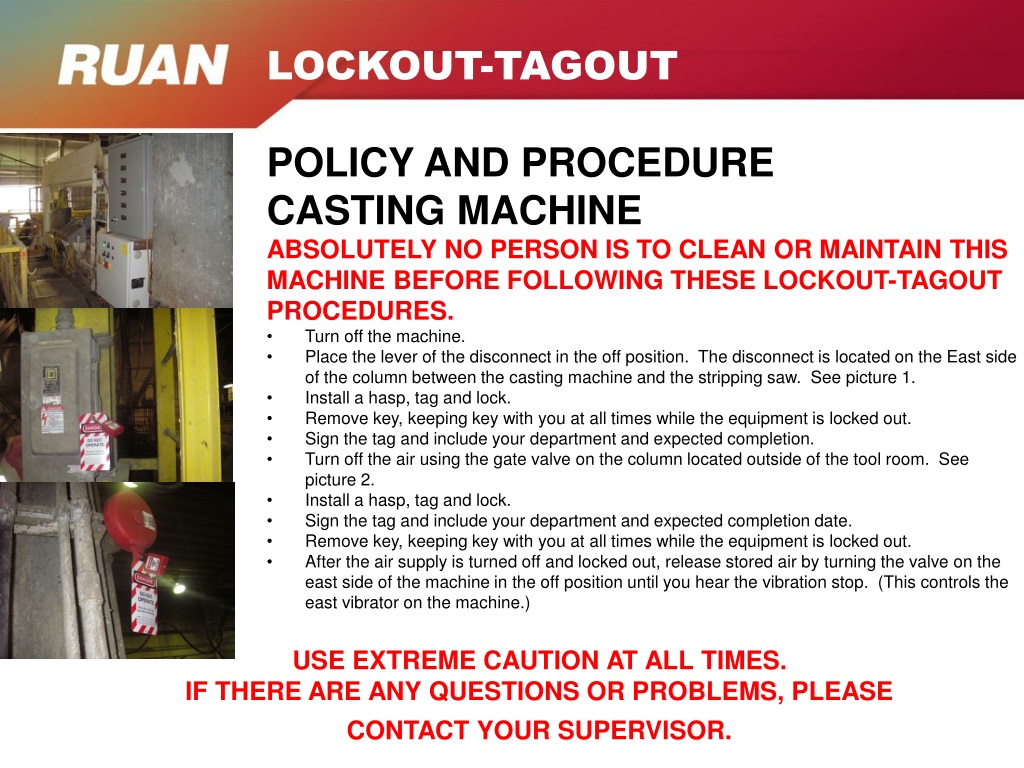
Equipment-Specific LOTO Procedures Not all machines are the same. A one-size-fits-all approach fails.
Create detailed procedures for high-risk or complex equipment. These should include:
- Equipment name and ID
- Location
- Energy types involved
- Step-by-step shutdown and isolation
- Diagrams of lock points
- List of required tools (e.g., lockout hasps, circuit breaker locks)
For example:
| Machine Type | Energy Sources | Lock Points |
|---|---|---|
| CNC Machine | Electrical, hydraulic, pneumatic | Main disconnect, hydraulic valve |
| Industrial Oven | Electrical, thermal, gas | Power breaker, gas shutoff valve |
| Conveyor System | Electrical, mechanical, gravity | Drive motor, tension adjuster |
Use visual aids like lockout flowcharts or laminated quick-reference guides at the machine site. Workers under stress remember visuals better than text.
Integrating Contractors into Your LOTO Program
Contractors often perform maintenance but may not follow your internal procedures. This creates a major risk gap.
Your LOTO policy must require:
- Contractor orientation on site-specific LOTO rules
- Use of your lockout devices (not their own)
- Coordination with an on-site authorized employee
- Documentation of lock application and removal
A chemical plant once had a fatal accident when a contractor bypassed a tagged valve, unaware of the process. The plant’s policy didn’t require direct supervision. After the incident, they mandated a “buddy system” for all external maintenance.
Auditing and Continuous Improvement
OSHA requires annual inspections of LOTO procedures. But smart companies go further.
An effective audit includes:
- Observing a real or simulated lockout
- Interviewing authorized and affected employees
- Checking lockout devices for damage or misuse
- Reviewing training records
- Verifying procedure accuracy against actual equipment
Use findings to update procedures and retrain staff. One food processing plant discovered 40% of their LOTO steps were outdated after an audit—some machines had been upgraded, but procedures hadn’t.
Track near-misses and deviations. Even a close call without injury should trigger a review. Continuous improvement turns compliance into real protection.
Building a Culture Around LOTO Compliance
The best LOTO program fails if workers see it as “just paperwork.” Culture matters.
Leaders must model compliance. If a manager asks someone to “quickly check” a machine without lockout, it signals that safety is optional.
Encourage peer accountability. Empower any employee to stop work if LOTO isn’t followed. Recognize safe behavior publicly.
One paper mill introduced a “Lock of the Month” award for employees who corrected LOTO violations. Incident rates dropped, and engagement rose.
Final Steps: Implementing or Upgrading Your LOTO Program
Start by assessing your current state:
- Do you have written LOTO procedures for every piece of equipment?
- Are they up to date and accessible?
- Is training current and documented?
- Are lockout devices readily available and in good condition?
Then take action:
- Draft or revise your LOTO policy with leadership buy-in.
- Develop machine-specific procedures with input from maintenance teams.
- Train all affected and authorized employees.
- Conduct audits and refresher training annually.
- Use feedback to refine the program continuously.
A strong lockout tagout policy and procedure isn’t about checking OSHA boxes. It’s about ensuring every worker goes home safe. The process may take effort, but the cost of failure is too high to ignore.
Frequently Asked Questions
What is the difference between lockout and tagout? Lockout uses physical locks to prevent equipment startup. Tagout uses warning tags. Lockout is preferred because it provides physical security.
Who is responsible for applying lockout devices? Only authorized employees who are trained and performing servicing work can apply and remove their own lockout devices.
Can multiple people use one lock during maintenance? No. Each worker must apply their own personal lock. Group lockout procedures use a lockout box where each person places their lock.
Do LOTO procedures need to be machine-specific? Yes. Each machine or piece of equipment with hazardous energy must have a unique LOTO procedure detailing its isolation steps.
How often should LOTO training be repeated? OSHA requires retraining at least once every 12 months, or when procedures change, roles change, or deficiencies are observed.
Can tagout be used instead of lockout? Yes, but only if a lock cannot be applied. Tagout-only systems require additional safety measures due to higher risk of human error.
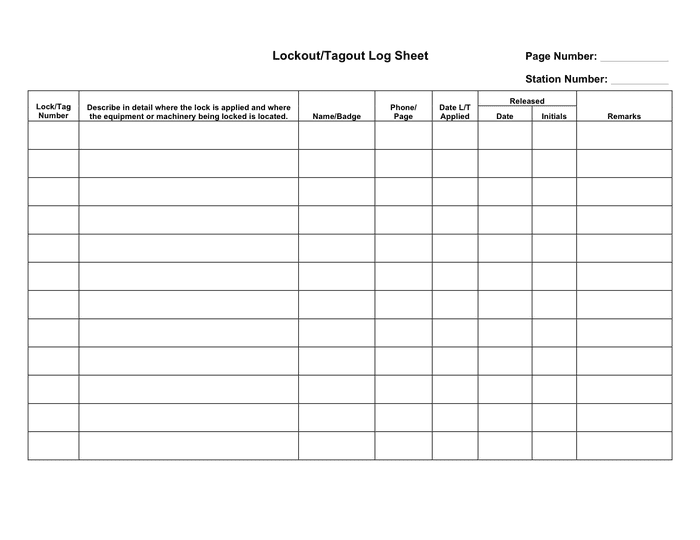
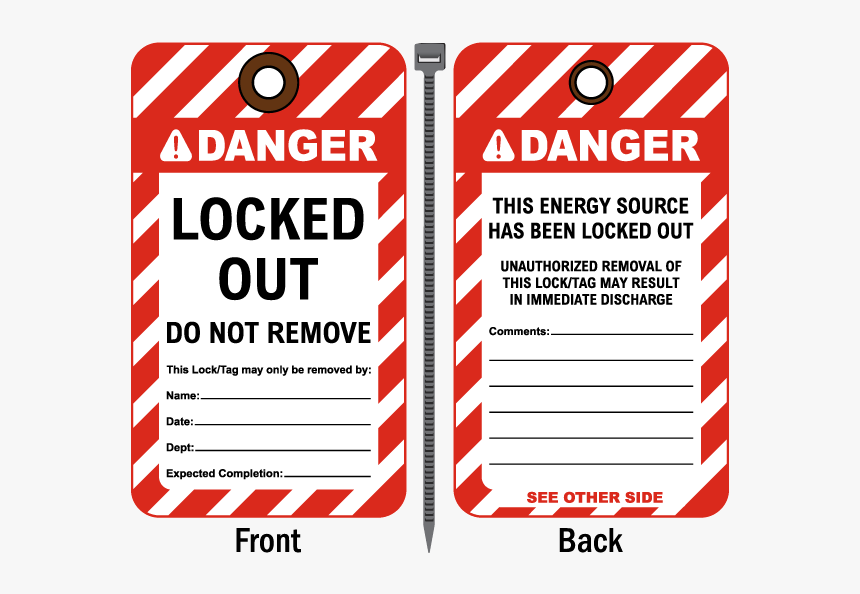
What should a LOTO tag include? Name of the authorized employee, date, reason for lockout, and contact information.
FAQ
What should you look for in Lockout Tagout Policy and Procedure: A Complete Guide? Focus on relevance, practical value, and how well the solution matches real user intent.
Is Lockout Tagout Policy and Procedure: A Complete Guide suitable for beginners? That depends on the workflow, but a clear step-by-step approach usually makes it easier to start.
How do you compare options around Lockout Tagout Policy and Procedure: A Complete Guide? Compare features, trust signals, limitations, pricing, and ease of implementation.
What mistakes should you avoid? Avoid generic choices, weak validation, and decisions based only on marketing claims.
What is the next best step? Shortlist the most relevant options, validate them quickly, and refine from real-world results.