Workers open a panel on a conveyor system, only to have it suddenly power on—sending one employee to the hospital. This isn’t a rare scenario. According to OSHA, failure to control hazardous energy accounts for nearly 10% of serious accidents in manufacturing. At the heart of preventing these incidents are effective lockout tagout safety procedures. When implemented correctly, LOTO systems save lives. When ignored or poorly executed, they lead to amputations, electrocutions, and fatalities.
This article breaks down the real-world application of lockout tagout safety procedures—what they are, how to implement them properly, and where most organizations fail. You’ll walk away with actionable steps to strengthen your energy control program and avoid preventable tragedies.
What Are Lockout Tagout Safety Procedures?
Lockout tagout (LOTO) safety procedures are a set of structured steps designed to isolate machines or equipment from their energy sources during maintenance, repair, or servicing. The goal is zero unexpected startup or release of stored energy.
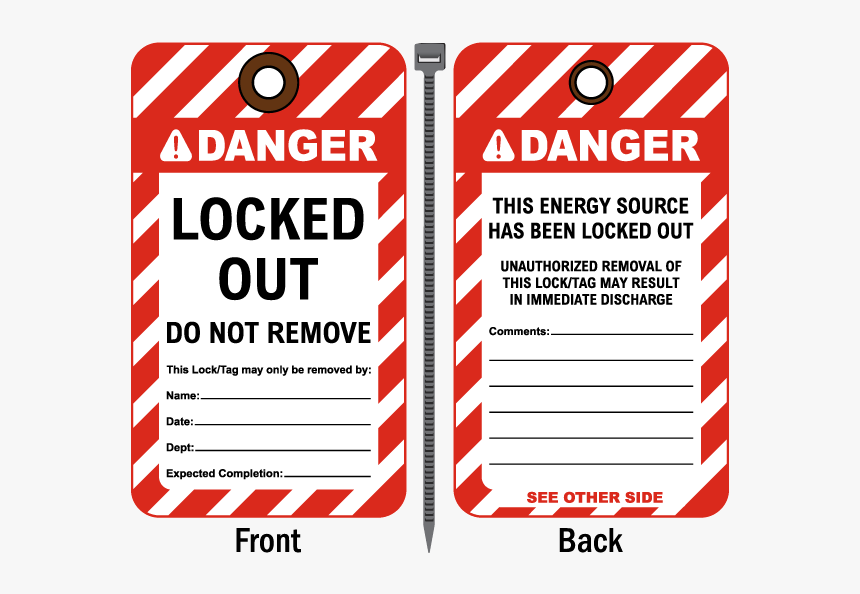
"Lockout" refers to physically locking energy-isolating devices—like circuit breakers or valve handles—with a padlock. "Tagout" means attaching a warning tag to the locked device, indicating who locked it, why, and when. While tagout alone is sometimes permitted, lockout is the preferred and more secure method.
These procedures apply to all forms of energy: electrical, mechanical, hydraulic, pneumatic, chemical, thermal, and even gravity. A hydraulic press, for example, may retain pressure in its lines after shutdown. A conveyor system may have tensioned belts that snap if released improperly. LOTO procedures ensure every potential energy source is neutralized.
Why Lockout Tagout Procedures Matter
Every year, dozens of workers are injured or killed because a machine energized unexpectedly during servicing. In one documented case, a maintenance technician was clearing a jam in a packaging machine. A coworker, unaware of the work in progress, restarted the machine from a remote control station. The result: severe crushing injuries.
LOTO procedures exist to prevent such scenarios. But compliance isn’t just about avoiding tragedy. It’s also a legal requirement under OSHA’s Control of Hazardous Energy standard (29 CFR 1910.147). Violations routinely result in six-figure fines.
More importantly, a strong LOTO program signals a culture of safety. Workers who trust that systems are in place to protect them are more engaged, compliant, and less likely to take shortcuts.
The 6-Step Lockout Tagout Safety Procedure
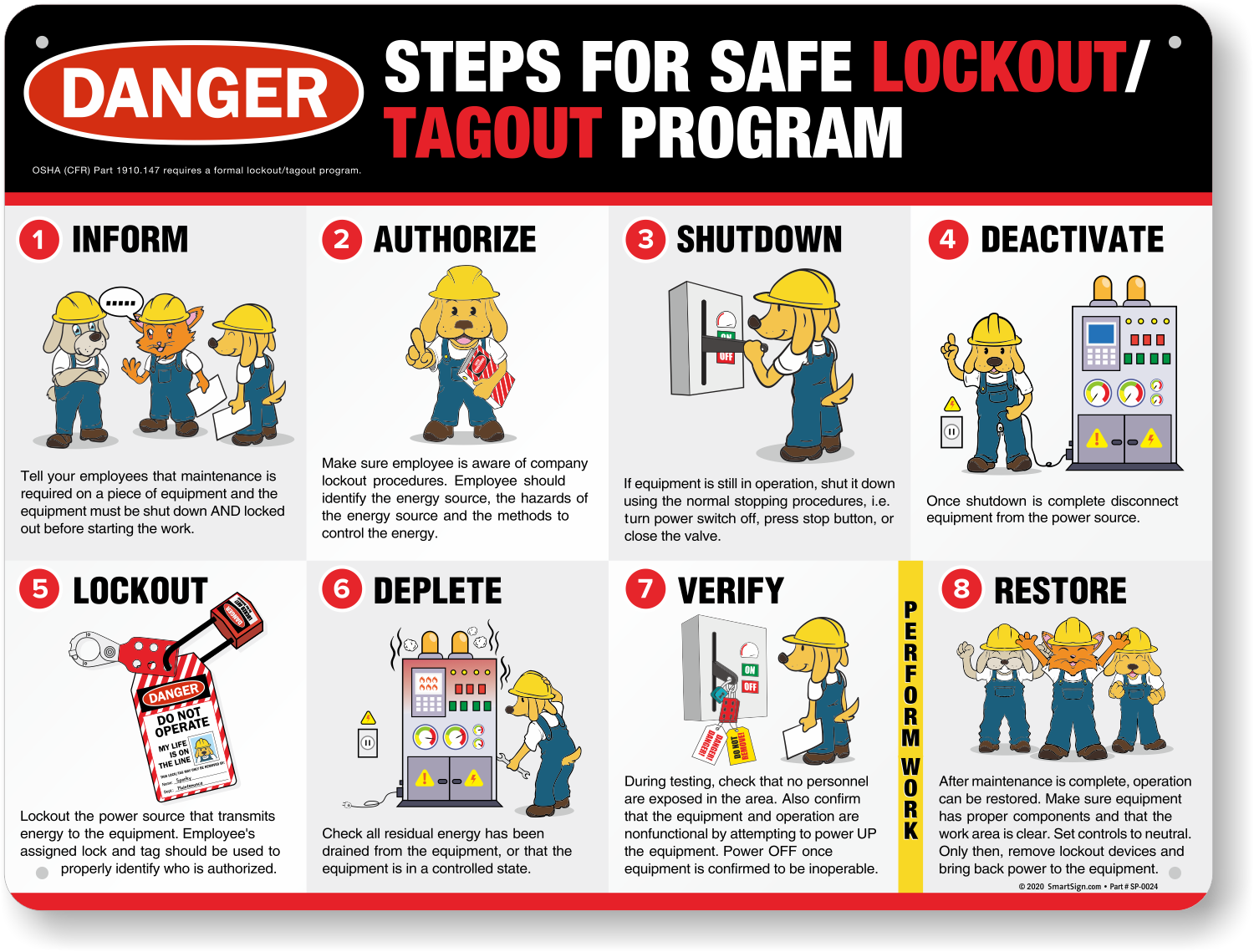
Effective LOTO isn’t a one-size-fits-all checklist. It’s a sequence of deliberate, verified actions. Here’s the industry-standard six-step process:
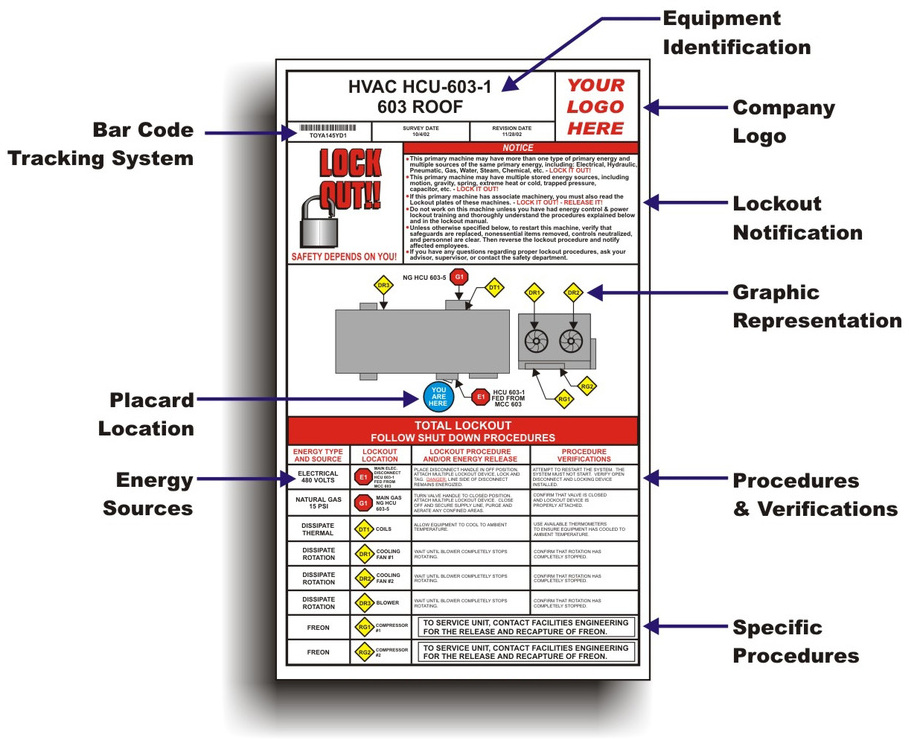
#### 1. Preparation Before any work begins, authorized employees must identify all energy sources powering the equipment. This includes primary power (e.g., electrical supply) and secondary sources (e.g., springs, capacitors, elevated loads). Reviewing equipment manuals and energy flow diagrams is critical.
Common mistake: Assuming a single disconnect switch cuts all power. In reality, auxiliary systems—like backup hydraulics or remote sensors—may remain live.

#### 2. Notification Inform all affected employees that maintenance is about to begin. This includes operators, supervisors, and nearby workers. Clear communication prevents someone from unknowingly re-energizing equipment.
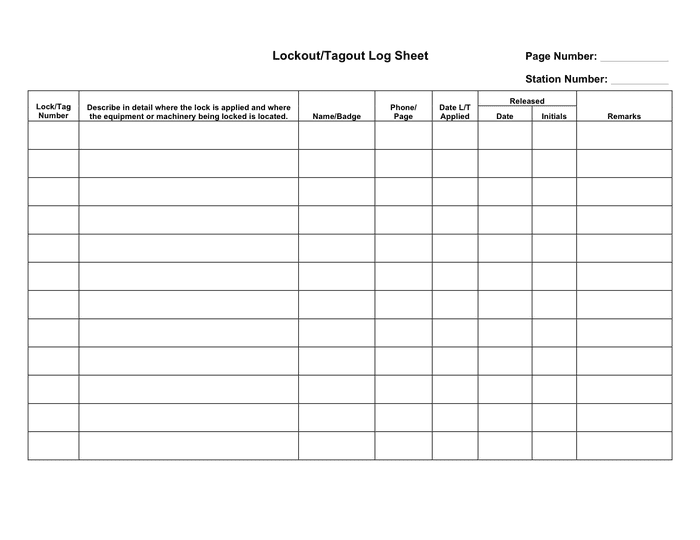
Practical tip: Use a sign-in log at the lockout station. Each person entering the area must acknowledge the LOTO is active.
#### 3. Shutdown Shut down the equipment using normal stopping procedures. Press emergency stops or control panel buttons—never rely on disconnecting power abruptly.
Ensure the machine has fully stopped. Rotating parts, for example, may take time to settle.
#### 4. Isolation Physically disconnect or block all energy sources. This means: - Opening circuit breakers - Closing line valves - Blocking moving parts - Depressurizing lines - Draining fluids
Use approved isolation points, not convenience switches. Lockout devices must be durable, non-reusable, and only opened with a key or combination known to the authorized employee.
#### 5. Application of Locks and Tags Each authorized worker applies their personal lock and tag to every energy-isolating device. This is a one-person, one-lock, one-key system. Group lockout boxes may be used when multiple workers are involved, but each individual still applies their own lock.
Tags must include: - The employee’s name - Date and time of lockout - Reason for the lockout - Contact information
Critical rule: Never remove another person’s lock. Only the individual who applied it may remove it—unless formal transfer lockout procedures are in place under strict supervision.
#### 6. Verification Before work begins, the authorized employee must verify that zero energy remains. This means attempting to restart the machine using normal operating controls. Since energy is isolated, it should not start.
Also check for residual energy: bleed lines, inspect capacitors, release tensioned components. Verification isn’t optional—it’s the final safety net.
Common LOTO Safety Procedure Failures
Even organizations with written LOTO programs often fall short in practice. These are the most frequent breakdowns:
#### Using Tags Without Locks Tagout alone is less secure. Tags can be ignored, misplaced, or removed accidentally. OSHA allows tagout only if the device provides a level of safety equivalent to lockout—but this is rare. Whenever possible, use lockout.
#### Incomplete Energy Source Identification Machines today are complex. A robotic arm may draw power from electricity, pneumatics, and data signals. Missing one source creates risk. Always conduct a full energy audit before servicing.
#### Group Lockout Confusion When multiple technicians work on one machine, group lockout boxes are used. But without clear accountability, someone may remove a lock prematurely. Every worker must apply and remove their own lock.
#### Skipping Verification Some workers assume “if it’s off, it’s safe.” That assumption kills. Always test-start the machine after lockout. If it powers on, stop and investigate—your procedure failed.
#### Poor Training and Documentation LOTO isn’t intuitive. Yet many companies train employees once and assume they’ll remember for years. Refresher training should be annual. Procedures must be documented, accessible, and machine-specific.
Real-World LOTO Use Cases
#### Case 1: Conveyor System Maintenance A technician needs to replace a drive belt on a roller conveyor. - Prep: Identifies electrical motor, tensioned rollers, and overhead line. - Notify: Posts a notice at the control panel and informs the shift supervisor. - Shut down: Stops the conveyor via control panel. - Isolate: Turns off the circuit breaker and locks it. Places blocks under rollers. - Lock/Tag: Applies personal lock and tag. - Verify: Tries to restart—no response. Inspects rollers—no tension. Only then does he begin work.
#### Case 2: Hydraulic Press Repair A press is leaking hydraulic fluid. The mechanic knows residual pressure is a risk. - Prep: Reviews schematics, marks hydraulic lines and electrical feed. - Notify: Places a "Do Not Operate" tag at the control station. - Shutdown: Powers down via control panel. - Isolate: Closes isolation valves, drains accumulator pressure. - Lock/Tag: Locks both electrical disconnect and hydraulic valve. - Verify: Attempts to cycle the press—no movement. Uses a pressure gauge to confirm zero psi. Safe to replace seals.
These cases show that LOTO isn’t just locking a switch. It’s a mindset: assume energy is present until proven otherwise.
Equipment and Tools for Effective LOTO
You can’t enforce procedures without the right tools. Here are five essential LOTO components:
| Tool | Purpose | Best Practice |
|---|---|---|
| Personal Locks | Individual control over energy isolation | Use keyed-alike or keyed-different based on access needs |
| Tagout Devices | Communicate lockout status | Tags must be tamper-resistant and include all required info |
| Lockout Hasps | Allow multiple locks on one isolation point | Use for group maintenance; ensure no forced removal |
| Breaker Lockouts | Secure circuit breakers in OFF position | Match size and type to electrical panel |
| Valve Lockouts | Prevent accidental valve opening | Use for pneumatic, hydraulic, gas lines |
Additional tools like lockout stations, group lockout boxes, and energy isolation tags help standardize the process across facilities.
Building a Sustainable LOTO Program
A one-time rollout won’t cut it. LOTO must be embedded in daily operations. Here’s how:
- Write machine-specific procedures for every major piece of equipment. Generic steps miss critical details.
- Train both authorized and affected employees. Operators don’t apply locks, but they must understand not to bypass them.
- Audit quarterly. Observe real LOTO applications. Are workers skipping verification? Are locks being shared?
- Update procedures when equipment changes. A retrofitted machine may have new energy sources.
- Empower workers to stop work if LOTO isn’t followed. Safety should never be overruled by production pressure.
One plant reduced maintenance incidents by 78% after introducing shadow audits—where safety officers silently observe LOTO execution and provide feedback.
Final Thoughts: Safety Is a Process, Not a Procedure
Lockout tagout safety procedures are more than compliance checkboxes. They are a sequence of deliberate safeguards that, when followed consistently, prevent life-altering injuries. The difference between a near-miss and a fatality often comes down to one step: verification.
Don’t treat LOTO as a formality. Audit it. Challenge it. Improve it. Make it part of your site’s DNA.
Start today: pull a random machine’s LOTO procedure, walk through it step-by-step, and test it. If it fails, fix it—before someone gets hurt.
FAQ
What should you look for in Lockout Tagout Safety Procedures That Prevent Workplace Injuries? Focus on relevance, practical value, and how well the solution matches real user intent.
Is Lockout Tagout Safety Procedures That Prevent Workplace Injuries suitable for beginners? That depends on the workflow, but a clear step-by-step approach usually makes it easier to start.
How do you compare options around Lockout Tagout Safety Procedures That Prevent Workplace Injuries? Compare features, trust signals, limitations, pricing, and ease of implementation.
What mistakes should you avoid? Avoid generic choices, weak validation, and decisions based only on marketing claims.
What is the next best step? Shortlist the most relevant options, validate them quickly, and refine from real-world results.