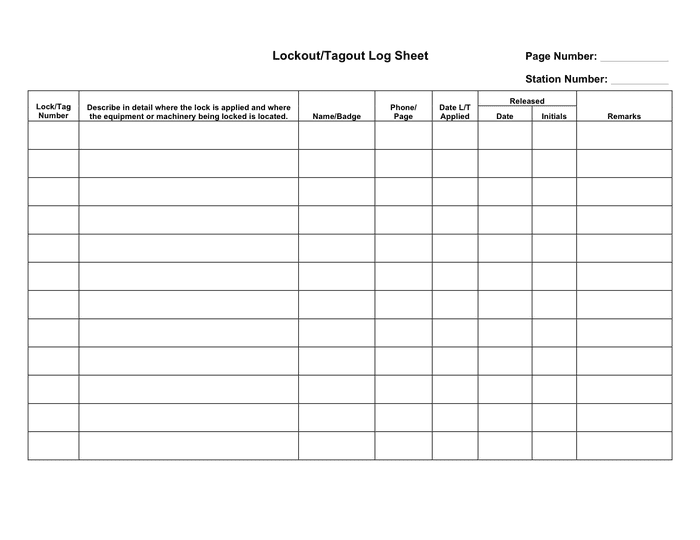
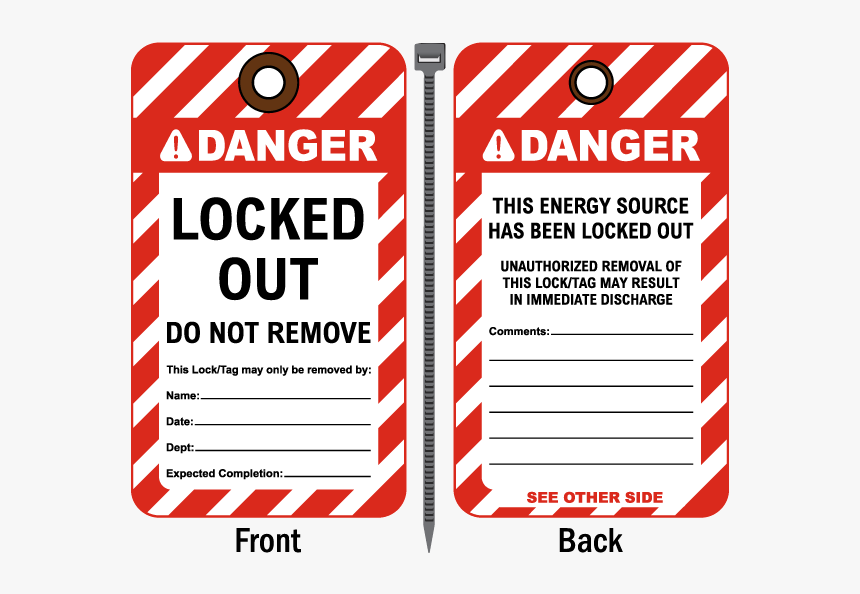
Every time a machine is serviced, a hidden danger lurks—unexpected startup. A conveyor belt kicks on mid-repair. A press descends without warning. These aren’t rare tragedies—they’re preventable failures in energy control. At the heart of every effective Lockout/Tagout (LOTO) program is a simple but critical tool: the lockout tagout log book.
It’s not just paperwork. It’s the legal and operational record that proves compliance, protects workers, and holds organizations accountable. Yet, in many facilities, it’s either missing, poorly maintained, or treated as an afterthought—opening the door to violations, injuries, and costly downtime.
This guide cuts through the noise. You’ll learn what a LOTO log book actually does, how to structure it for compliance and clarity, and the real-world mistakes that undermine its purpose.
Why a Lockout Tagout Log Book Isn’t Optional
OSHA’s 29 CFR 1910.147 mandates that employers implement a written energy control program, including documentation of each servicing or maintenance event. The log book is that documentation.
Without it, you can’t prove due diligence. During an OSHA audit, inspectors don’t just ask, “Do you have a LOTO program?” They ask, “Show us the records.”
Consider this scenario: A maintenance technician services a hydraulic press. He applies his lock, removes a panel, and begins work. Another worker, unaware of the lockout, attempts to test the machine and re-energizes the circuit. The result: a crushed hand, a $150,000 fine, and a shutdown.
The root failure? No log entry to track who locked out, when, and for what purpose. A log book isn’t bureaucracy—it’s a safety lifeline.
What Belongs in a Lockout Tagout Log Book
A compliant LOTO log is not a freeform journal. It must capture specific data points for every lockout instance. Use this checklist as a baseline:
- Date and time of lockout application
- Equipment name or ID number
- Location of equipment
- Name and employee ID of authorized person
- Type of energy sources isolated (electrical, pneumatic, hydraulic, thermal, etc.)
- Lock and tag numbers used
- Nature of servicing or maintenance
- Time lockout was removed
- Name of person removing the lock
- Verification of machine isolation (e.g., “tested for zero energy”)
Optional but valuable: - Supervisor signature - Work order or job ticket number - Emergency contact info - Notes on complications (e.g., “multiple energy sources discovered”)
Insight: A well-designed log forces consistency. If your log book doesn’t include lock numbers, you can’t track who used what—or worse, you can’t audit for lock misuse or shared access.
Paper vs. Digital: Choosing the Right Format

Many companies still use paper-bound LOTO logs. Others are shifting to digital platforms. Each has trade-offs.
Paper Log Books Pros:
- No training required
- Always accessible without Wi-Fi or power
- Tangible, hard to dispute in audits
Cons: - Prone to damage (water, grease, rips) - Illegible handwriting leads to errors - Hard to search, archive, or analyze
Digital Systems (Tablets, Apps, Cloud Platforms) Pros:
- Searchable entries
- Auto-time stamps and user authentication
- Integration with CMMS or safety software
- Remote access for supervisors
Cons: - Requires device access and training - Potential downtime if system fails - Security and backup concerns
Bottom Line: For small shops with limited maintenance, a sturdy spiral-bound log book with carbon copies may suffice. For larger industrial sites, digital systems reduce risk and scale better—but only if users adopt them consistently.
Common Mistakes That Undermine LOTO Logs
Even with a log in place, poor practices can render it useless.
1. Retroactive Entries Technicians fill out the log after the work is done—or worse, at the end of the week. This defeats the purpose. Real-time documentation ensures accuracy and allows immediate oversight.
Fix: Require sign-off before lock removal.
2. Vague Descriptions “Fixed motor” or “replaced part” tells you nothing. Better: “Replaced drive belt on Conveyor Line 3; disconnected 480V power and tensioned rollers.”
Specificity protects everyone—from auditors to future technicians.
3. Missing Removal Records
Many logs track lock application but not removal. OSHA requires both. If a lock is left on accidentally, you need to know who applied it and when.
4. No Verification Step A line for “tested for zero energy” is often skipped. But verification is the final, critical layer of safety.
Real-World Case: A plant in Ohio recorded a LOTO event but failed to document testing. When an arc flash occurred during service, OSHA cited them for incomplete procedures—even though no one was injured.
Five Reliable Lockout Tagout Log Book Solutions Whether paper or digital, here are five proven options trusted in industrial environments:
| Product | Type | Key Features | Best For |
|---|---|---|---|
| Brady LOTO Log Book (LBBK-1) | Paper | Pre-formatted pages, carbon copy, durable cover | Small to mid-sized facilities |
| Lockout Safety Systems LOTO Pro | Digital Software | Cloud sync, mobile access, audit trails | Large plants, multi-site ops |
| Grace Industries Digital LOTO | App + Cloud | GPS tagging, photo uploads, integration with SAP | High-compliance industries |
| Seton Lockout/Tagout Log Binder | Paper | Customizable forms, OSHA-compliant layout | Facilities with existing binders |
| Pro-Safe LOTO Log System | Hybrid | Paper logs with digital scan archiving | Transitioning teams |
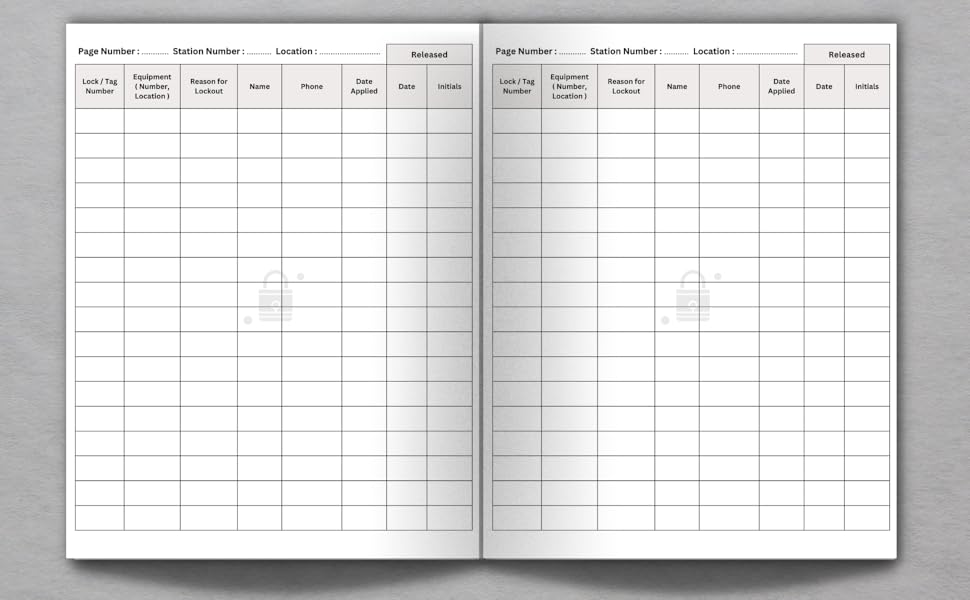
Choose based on your team’s workflow—not just features. An app that’s never opened is worse than a paper log used daily.
How to Train Teams on Proper Log Use
A log book only works if people use it correctly. Training should go beyond “fill out the form.”
Conduct Hands-On Drills Simulate a maintenance event. Have technicians:
- Identify energy sources
- Apply locks and tags
- Fill out the log in real time
- Verify isolation
- Remove locks and sign off
Debrief afterward. Did they skip any fields? Was the description clear?
Audit Random Entries Monthly Pick 10% of log entries and review them. Look for: - Completeness - Accuracy of equipment IDs - Signatures and time stamps - Evidence of verification
Return findings to the team—without blame. Frame it as continuous improvement.
Post a “What Not to Do” Wall Use redacted examples of bad entries (e.g., missing times, illegible names). Contrast them with strong examples. Visuals stick better than lectures.
Integrating the Log Book into Your Safety Culture
The log book shouldn’t live in a drawer. It should be part of daily operations.
Start with a Pre-Work Huddle
Before any maintenance, supervisors should review: - The current log entries - Ongoing lockouts - Conflicting work orders
This prevents overlap and miscommunication.
Tie It to Permit-to-Work Systems In high-risk environments, combine LOTO logs with work permits. The log becomes one component of a broader safety gate.
Make It Visible Place the log book near the equipment or in a central safety station—not in an office. Visibility increases usage.
Pro Tip: Use color-coded tabs for departments or equipment types. A red tab for electrical, blue for mechanical—helps technicians find the right page fast.
The Final Check: Is Your LOTO Log Book Effective?
Ask these five questions:
- Can you prove every lockout event from the last 12 months?
- Are entries completed in real time, not after the fact?
- Do descriptions clearly explain what was done and why?
- Is there a record of zero-energy verification for each event?
- Could a new technician follow the log and understand past actions?
If you can’t answer “yes” to all, your log is failing its purpose.
A lockout tagout log book is more than a compliance checkbox. It’s a living record of safety decisions. It protects workers, supports audits, and strengthens accountability. Whether paper or digital, well-maintained or neglected, it reflects your organization’s commitment to zero-harm operations.
Start today: Audit your current log. Fix gaps. Train your team. Make documentation as non-negotiable as wearing a hard hat.
Your next incident might be prevented not by a new device—but by a single, properly filled line in a log book.
Frequently Asked Questions
What is the purpose of a lockout tagout log book? It documents every LOTO event to ensure compliance, track accountability, and verify that energy control procedures were followed.
Who should fill out the LOTO log book? The authorized employee performing the lockout must complete the entry, including lock details, equipment, and verification steps.
How long should LOTO log records be kept? OSHA recommends retaining records for at least one year, but some industries keep them for up to five years for liability and audit purposes.
Can a digital log replace a paper LOTO log book? Yes, if it provides equivalent or better traceability, security, and accessibility. Digital logs must be tamper-proof and backed up.
Do I need a separate log for each machine? Not necessarily. A single log can track multiple machines if entries are clearly labeled with equipment IDs and locations.
Should contractors fill out the LOTO log? Yes. All authorized personnel, including contractors, must document their lockout activities in the log.
What happens if a LOTO log entry is missing? Missing entries create compliance gaps. OSHA may issue citations, and internal investigations become harder. Always verify log completion before equipment restart.
FAQ
What should you look for in Lockout Tagout Log Book: Your Key to Workplace Safety Compliance? Focus on relevance, practical value, and how well the solution matches real user intent.
Is Lockout Tagout Log Book: Your Key to Workplace Safety Compliance suitable for beginners? That depends on the workflow, but a clear step-by-step approach usually makes it easier to start.
How do you compare options around Lockout Tagout Log Book: Your Key to Workplace Safety Compliance? Compare features, trust signals, limitations, pricing, and ease of implementation.
What mistakes should you avoid? Avoid generic choices, weak validation, and decisions based only on marketing claims.
What is the next best step? Shortlist the most relevant options, validate them quickly, and refine from real-world results.