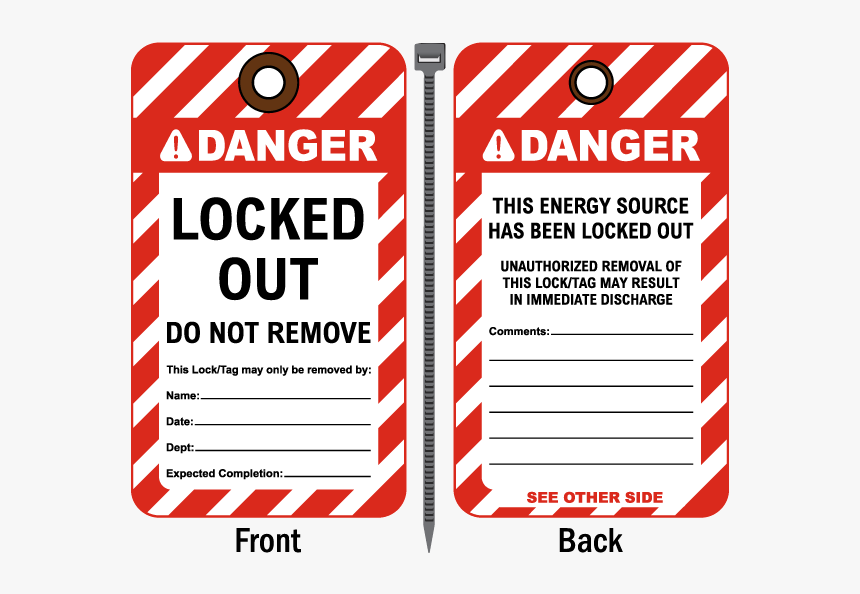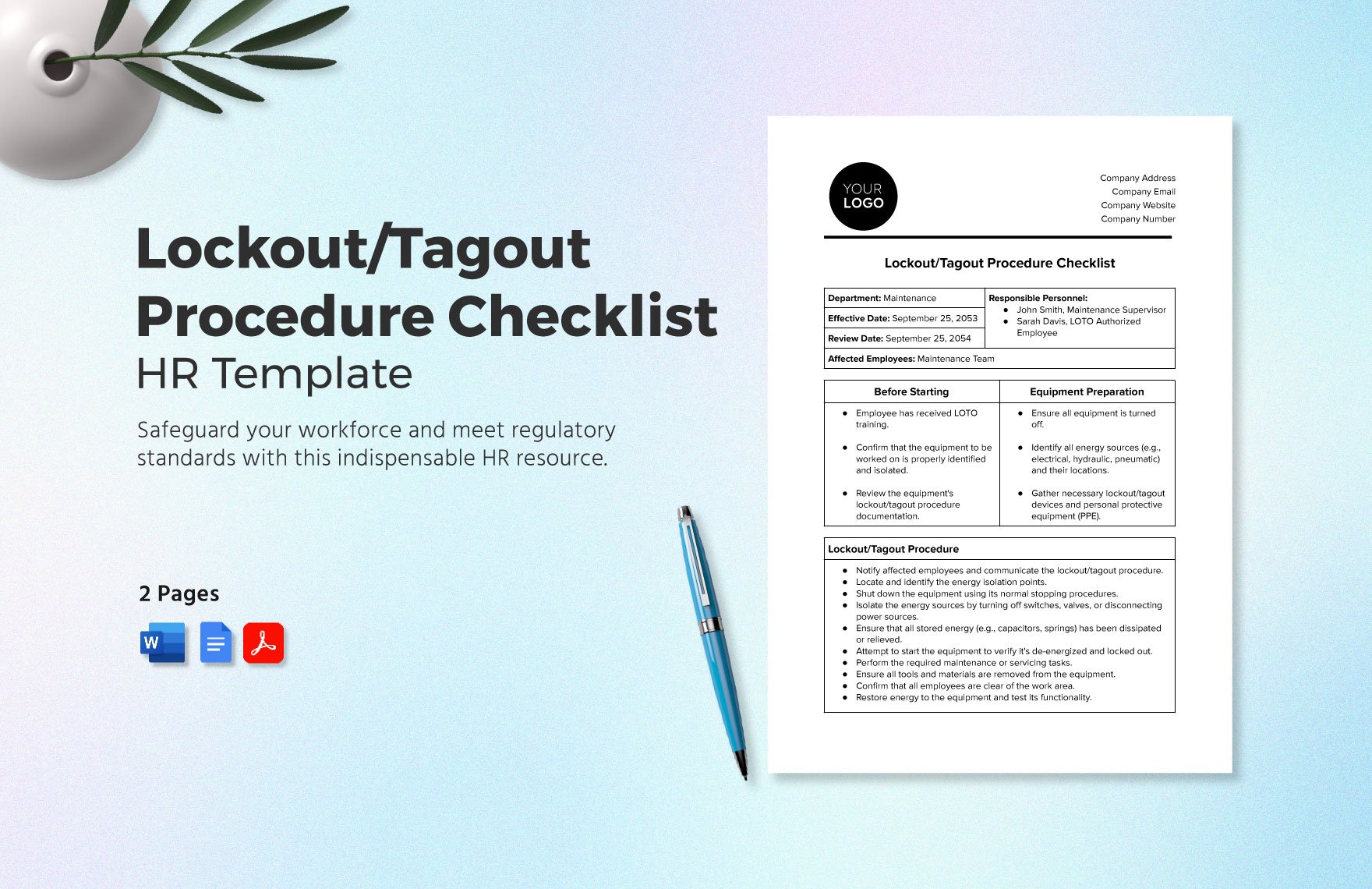
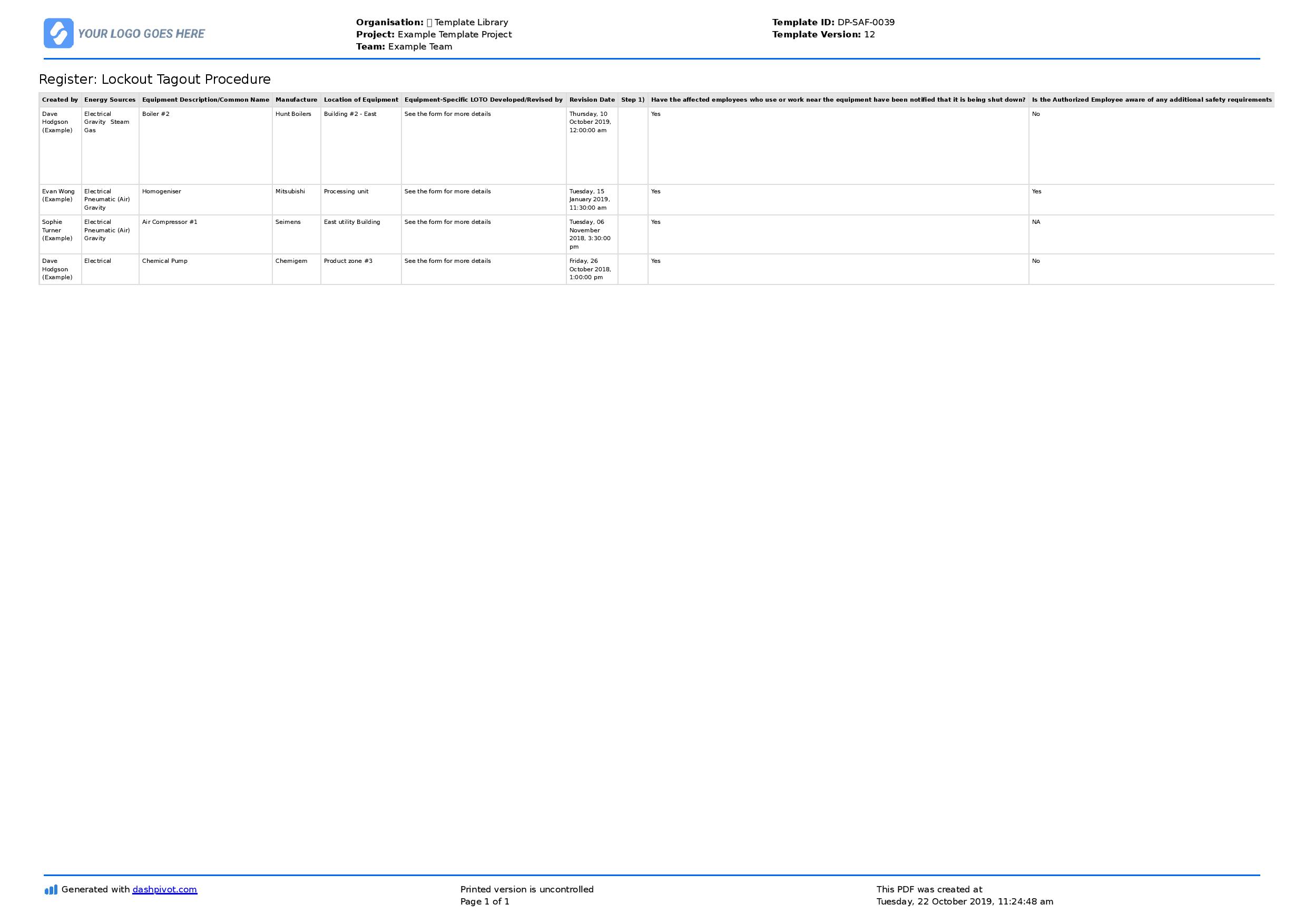
Every year, hundreds of workers suffer serious injuries during equipment servicing—all because proper lockout tagout (LOTO) procedures weren’t followed. The root cause? Not a lack of awareness, but inconsistent execution. That’s where a lockout tagout procedure template in Excel becomes essential. It turns abstract safety policies into actionable, repeatable workflows—ensuring compliance, reducing human error, and streamlining maintenance across teams and shifts.
An Excel-based LOTO template doesn’t just document steps—it enforces discipline. From identifying energy sources to verifying zero-energy states, it centralizes accountability. This guide walks you through the core components of an effective LOTO Excel template, common pitfalls to avoid, and real-world implementation strategies.
Why Use an Excel Template for Lockout Tagout Procedures?
Spreadsheets are often underestimated in safety programs, but Excel offers distinct advantages for LOTO:
- Accessibility: Nearly every workplace has Excel or compatible software.
- Customization: Easily modify fields, add equipment-specific steps, or integrate with existing maintenance logs.
- Version control: Track updates, approvals, and revisions in real time.
- Integration: Link to CMMS (Computerized Maintenance Management Systems) or print directly for field use.
An Excel template standardizes how teams isolate machines—from conveyor belts to industrial presses—without requiring expensive software. It bridges the gap between OSHA compliance and on-the-ground execution.
Example: A food processing plant reduced downtime by 30% after switching from paper checklists to a digital Excel LOTO template. Technicians could pre-load steps during shift changes, reducing confusion and missed isolations.
Key Components of a LOTO Procedure Template in Excel
A useful Excel template goes beyond a simple checklist. It should include structured sections that mirror OSHA’s energy control program requirements.
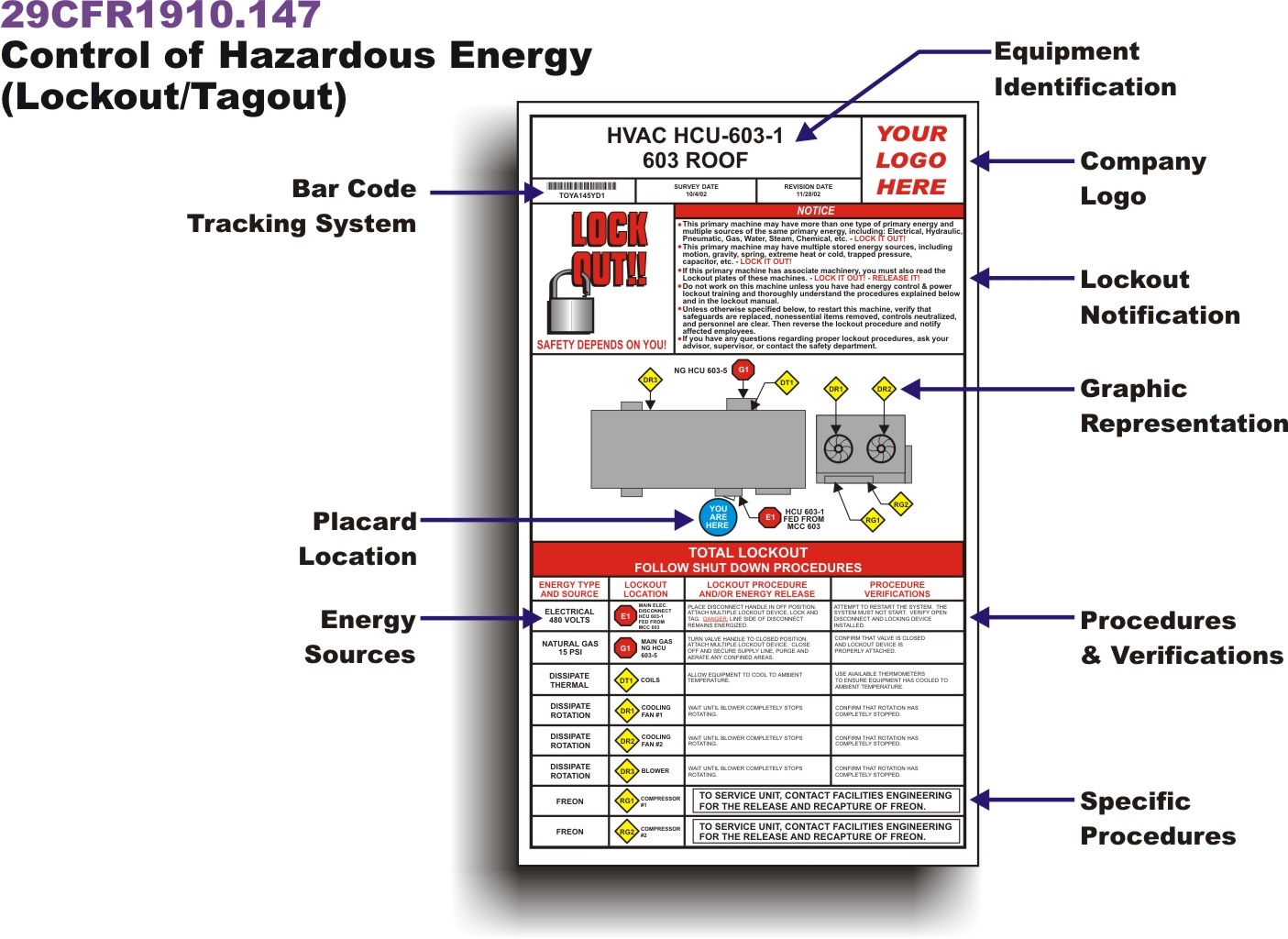
1. Equipment Identification Start
with a dedicated section for machine details:
- Equipment name and ID number
- Location (department, floor, line)
- Primary and secondary energy sources (electrical, hydraulic, pneumatic, thermal, chemical)
This prevents confusion—especially in facilities with multiple models of the same machine.
2. Authorized Personnel Log Track who’s trained and approved for LOTO activities:
- Employee name and ID
- Training date and expiration
- Signature field (digital or printed)
This ensures only qualified personnel perform isolations.
3. Step-by-Step Lockout Sequence Break down the process into clear, sequential actions:
- Notify affected employees
- Shut down the machine using normal controls
- Isolate all energy sources
- Apply lockout devices and tags
- Release stored energy (bleed lines, drain capacitors)
- Verify zero-energy state
Each step should have a checkbox and space for initials or timestamps.
4. Group Lockout Support For complex maintenance involving multiple workers, include:
- Primary lockout coordinator
- Individual lock placements
- Clearance check before re-energizing
This prevents accidental startup when a team is still working.
5. Verification and Sign-Off Final section for:
- Pre-startup inspection notes
- Clearance confirmation
- Signatures of all involved personnel
This creates a legal and operational audit trail.
Common Mistakes When Using LOTO Excel Templates
Even the best template fails if misused. Avoid these real-world errors:
❌ Treating it as a One-Size-Fits-All
Using a generic template across all equipment leads to missed energy sources. Solution: Customize the template for each machine type.
❌ No Version Control Multiple versions floating around cause confusion. Solution: Use file naming like LOTO-ConveyorB-Line3_v2.1.xlsx and store centrally.
❌ Skipping Verification Steps Workers often check “verified” without testing. Solution: Add a field requiring a multimeter reading or physical test.
❌ Ignoring Stored Energy Templates that omit spring tension, gravity, or residual pressure create deadly gaps. Solution: Include a dedicated “Stored Energy” column in the isolation step.
Case Study: A technician was injured when a press released stored hydraulic pressure. The Excel form used didn’t list “decompress lines” as a required step—highlighting the cost of incomplete templates.
Free vs. Custom-Built LOTO Excel Templates: What Works?
While free templates are widely available, their effectiveness varies.
| Type | Pros | Cons |
|---|---|---|
| Free Downloadable Templates | Quick to deploy, OSHA-aligned structure | Often too generic, lack customization fields |
| Custom-Built Templates | Tailored to equipment, integrates with workflows | Requires internal effort to develop and maintain |
For most mid-sized operations, a hybrid approach works best: start with a solid free template, then adapt it per machine type.
Tip: Add conditional formatting in Excel—turn cells red if a step is unchecked, or highlight overdue training dates automatically.
5 Free Lockout Tagout Excel Templates You Can Use Today
Here are reliable, downloadable LOTO Excel templates—each suitable for immediate use with minor customization:
- OSHA-Compliant Basic LOTO Template (NIST-style)
- - Clean layout, 6-step isolation process
- - Includes energy source mapping table
- - Best for: Small manufacturers, labs
- Group Lockout Procedure Excel Sheet
- - Built-in hasp and lock tracking
- - Coordinator sign-off and clearance log
- - Best for: Facilities with team-based maintenance
- Machine-Specific LOTO Template Pack
- - Pre-filled examples for conveyors, presses, pumps
- - Color-coded energy types
- - Best for: Multi-equipment sites
- Bilingual (English/Spanish) LOTO Template
- - Dual-language instructions and warnings
- - Useful for diverse workforces
- - Best for: Food processing, agriculture
- Digital-Ready LOTO Form with Timestamps
- - Auto-date fields, digital signature space
- - Compatible with tablets and printouts
- - Best for: Tech-forward plants transitioning from paper
Note: Always validate templates against your internal safety policies and equipment manuals before deployment.
How to Deploy a LOTO Excel Template Across Your Facility
Rolling out a new template requires more than just sharing a file.
Step 1: Pilot Test on One Machine Choose a high-risk or frequently serviced machine. Run 3–5 lockout cycles using the Excel form. Identify gaps.
Step 2: Train Authorized Employees Conduct hands-on sessions:
- Open the Excel file
- Walk through each tab
- Practice digital signing and printing
Include a quiz to confirm understanding.
Step 3: Integrate
with Existing Safety Systems Link the Excel template to:
- Maintenance schedules
- Incident reporting logs
- Training records
This creates a unified safety ecosystem.
Step 4: Audit and Refine Quarterly Randomly audit completed LOTO sheets. Look for: - Missing signatures - Unverified steps - Outdated training dates
Use findings to update the template.
Pro Tip: Convert your Excel file to PDF after each use and archive it by date and machine. This simplifies OSHA audits.
Limitations of Excel-Based LOTO Systems
Excel is powerful—but not perfect.
- No real-time collaboration: Multiple users can’t edit simultaneously without conflict.
- Limited automation: No alerts for expired training or overdue procedures.
- Security risks: Unprotected files can be altered accidentally.
For high-risk or large-scale operations, consider upgrading to a digital LOTO platform after mastering the Excel process.
But for most companies, Excel remains the most practical starting point—especially when templates are well-designed and rigorously enforced.
Final Thoughts: Turn Compliance into Culture
A lockout tagout procedure template in Excel is more than a document—it’s a behavior-shaping tool. When every technician follows the same structured process, safety becomes routine, not reactive.
Start with a solid template. Customize it. Train your team. Audit consistently. The goal isn’t just OSHA compliance—it’s a workplace where no one gets hurt during maintenance.
Download a trusted Excel LOTO template today, adapt it to your equipment, and run your first fully documented lockout within 48 hours. That’s how safety programs evolve from paperwork to protection.
FAQ
Where can I download a free lockout tagout Excel template? Reputable sources include OSHA’s website, NIOSH, and industrial safety organizations like Grainger or Brady. Always verify the template includes energy source identification and verification steps.
Can Excel templates replace formal LOTO training? No. Templates support trained personnel—they don’t substitute for OSHA-mandated training on energy control procedures.
How often should LOTO procedures be reviewed? At least annually, or whenever equipment changes, a near-miss occurs, or new personnel are added.
Should the Excel file be printed or used digitally? Either is acceptable. If digital, ensure devices are available in the field and the file is protected from edits during use.
What if a machine has multiple energy sources? The template must list each source separately—electrical, hydraulic, pneumatic—with individual lock points and verification methods.
Can Excel track employee LOTO certification? Yes. Use a separate tab to log training dates, expiration reminders, and re-certification status.
Is a LOTO Excel template legally binding? While not a legal document itself, it serves as evidence of compliance during OSHA inspections when properly completed and archived.
FAQ
What should you look for in Lockout Tagout Procedure Template Excel Free Download? Focus on relevance, practical value, and how well the solution matches real user intent.
Is Lockout Tagout Procedure Template Excel Free Download suitable for beginners? That depends on the workflow, but a clear step-by-step approach usually makes it easier to start.
How do you compare options around Lockout Tagout Procedure Template Excel Free Download? Compare features, trust signals, limitations, pricing, and ease of implementation.
What mistakes should you avoid? Avoid generic choices, weak validation, and decisions based only on marketing claims.
What is the next best step? Shortlist the most relevant options, validate them quickly, and refine from real-world results.