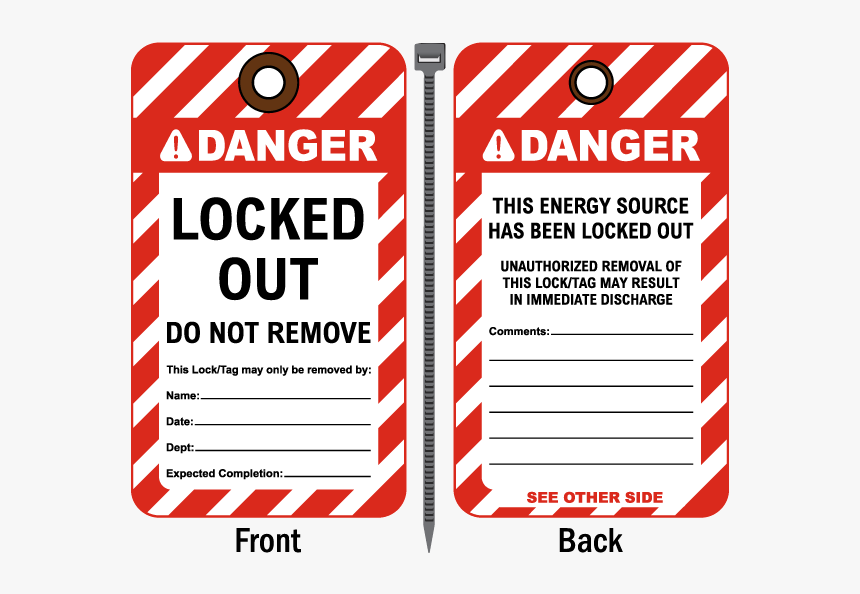
Maintenance work on machinery carries serious risks. One misstep—a valve opened too soon, a circuit re-energized—can lead to injury or worse. That’s where lock out tag templates come in. They’re not just paperwork; they’re critical components of a Lockout/Tagout (LOTO) program designed to isolate energy sources and communicate danger. Yet, many organizations use generic, incomplete, or handwritten tags that fail under audit or, worse, in real emergencies.
A well-designed lock out tag template standardizes communication, enforces accountability, and meets OSHA and industry requirements. But what makes a template effective? And how do you implement one that actually works in the field?
This guide breaks down the anatomy of high-functionality lock out tag templates, common pitfalls, real-world applications, and how to choose or build the right one for your operation.
Why Lock Out Tag Templates Matter
LOTO isn’t optional. OSHA standard 29 CFR 1910.147 mandates that employers implement procedures to control hazardous energy during servicing or maintenance. Tags are part of that system—they warn others not to operate equipment and identify who applied the lock.
But not all tags are equal.
Handwritten notes on masking tape? Noncompliant. Generic templates missing key fields? Risky. Reusable tags with erasable ink? Dangerous.
A proper lock out tag template acts as both a legal record and a frontline safety tool. It ensures every person, from technician to supervisor, knows:
- What equipment is locked
- Why it’s locked
- Who applied the lock
- When it was applied
- What energy sources are isolated
Without this clarity, the gap between procedure and practice widens—and accidents follow.
Key Elements of an Effective Lock Out Tag Template
A strong template isn’t just a label—it’s engineered for visibility, clarity, and compliance. Here’s what every lock out tag template should include:
#### 1. Bold Warning Header Use a high-contrast, standardized phrase like: "DANGER – DO NOT OPERATE" This must be instantly readable from a distance and stand out visually.
#### 2. Equipment Identification A dedicated field for asset name, ID number, or location. Example: - Hydraulic Press – Line 3, Station B - Motor #MTR-221 – South Pump Room
#### 3. Reason for Lockout A short description of work being performed: - Replacing drive belt - Cleaning conveyor rollers - Electrical panel inspection
This prevents assumptions and supports coordination during shift changes.
#### 4. Authorized Employee Section Fields for: - Technician name - Department - Signature or initials - Date and time applied
This creates personal accountability and traceability.
#### 5. Energy Source Types Checkboxes or fill-in lines for: - Electrical - Pneumatic - Hydraulic - Thermal - Chemical - Mechanical
Helps ensure all sources are addressed and documented.
#### 6. Lock Number or ID If your site uses a lock numbering system, include space for it. This ties the tag to a physical lock and control system.

#### 7. Additional Notes or Warnings Open field for special conditions: - "System must be bled down before removal" - "Two locks in use—coordinate with Shift Lead"
#### 8. Compliance Statement A printed line such as: "This tag is part of a controlled LOTO procedure. Removal without authorization is prohibited." Reinforces seriousness and legal standing.
Common Mistakes That Undermine LOTO Safety
Even with templates, real-world failures happen. Here are the most frequent missteps—and how to fix them:
#### ❌ Using Non-Durable Materials Paper tags tear, fade, or smudge. Use weather-resistant, tear-proof tag stock (e.g., vinyl or laminated polyester).
#### ❌ Skipping the "Reason" Field Saying "Maintenance in progress" isn’t enough. Be specific. "Replacing bearings on fan motor" tells responders exactly what’s happening—and why rushing won’t help.
#### ❌ Allowing Shared Tags or Blank Fields A tag with missing information is a liability. Never allow pre-filled or shared tags. Each lock requires a unique, completed tag.
#### ❌ Permitting Erasable Ink or Pencil Pencil can be smudged. Dry-erase tags are not OSHA-compliant. Use permanent marker only.
#### ❌ Ignoring Shift Transitions If work spans shifts, your template must support handoff. Include fields for: - Time of shift change - Name of relieving technician - Verification signature
Without this, the chain of control breaks.
Real-World Use Cases
Lock out tag templates aren’t one-size-fits-all. Here’s how they adapt across industries:
#### Manufacturing A robotic arm undergoes maintenance. The tag lists: - Equipment: Robotic Welder – Cell 5 - Work: Servo motor replacement - Energy sources: Electrical, pneumatic - Lock #189, applied by Alex Rivera, 7:05 AM
During a walkthrough, a supervisor sees the tag and knows not to restart the line.
#### Facilities Maintenance A boiler requires inspection. The tag includes a warning: "Thermal lockout in place. System cooling—do not energize for 4 hours." This prevents premature restart and scalding risks.
#### Laboratories A fume hood’s exhaust system is down. The tag notes: "Chemical hazard present. Ventilation disabled. Do not use hood." Protects researchers from exposure.
In each case, the template isn’t just a form—it’s a communication lifeline.
5 Lock Out Tag Template Options
You Can Use Today Whether you're building from scratch or sourcing pre-designed solutions, these options deliver reliability and compliance:
| Option | Format | Key Features | Best For |
|---|---|---|---|
| OSHA-Compliant LOTO Tag Template (Free PDF) | Print-ready PDF | Fillable fields, bilingual (EN/ES), durable stock compatible | Small teams on a budget |
| BradyLock™ Tag Station | Pre-printed roll tags | Tamper-resistant, sequential numbering, weatherproof | High-volume industrial sites |
| Seton LOTO Tag Kit | 50+ customizable tags | Assorted sizes, OSHA-compliant wording, quick-apply design | Facilities with diverse equipment |
| Creative Safety Supply Template Pack | Digital download (Word/PDF) | Editable fields, multilingual options, energy source icons | Teams needing customization |
| Custom In-House Template (via Canva or Word) | DIY digital | Full control over layout, branding, and fields | Organizations with strict internal standards |
Pro tip: Pair your template with a lockout logbook or digital tracking system to maintain a full audit trail.
How to Implement Your Lock Out Tag Template
Having a template isn’t enough. It must be integrated into your LOTO program.

#### Step 1: Train All Authorized Employees Ensure every technician understands how to fill out, apply, and remove tags. Conduct hands-on drills.
#### Step 2: Audit Tag Usage Monthly Check for incomplete fields, improper tagging, or unauthorized removal. Use findings to reinforce training.
#### Step 3: Standardize Tag Storage Keep tags locked near LOTO stations with locks, hasps, and blank forms. Reduce delays and improvisation.
#### Step 4: Review Templates Annually Update fields based on near-misses, audits, or equipment changes. Verify continued OSHA alignment.
#### Step 5: Enforce a Zero-Tolerance Policy Any deviation—missing signature, reused tag, blank reason—should trigger retraining, not just correction.
Choosing Between Pre-Made vs. Custom Templates
Pre-Made Templates (e.g., Seton, Brady, Grainger): - ✅ OSHA-aligned language - ✅ Durable, tested materials - ✅ Save time on design - ❌ Less flexibility in formatting - ❌ May not match internal numbering
Custom Templates (DIY in Word or Design Tools): - ✅ Fully tailored to your workflow - ✅ Can integrate with internal systems - ✅ Support multilingual teams - ❌ Requires legal/compliance review - ❌ Risk of missing critical fields
Verdict: Start with a pre-made OSHA-compliant template, then customize it incrementally based on your operational needs.
Final Thoughts: Templates Are Tools—But Culture Is Key
A lock out tag template is only as strong as the system behind it. The best-designed form won’t prevent accidents if workers bypass procedures, skip fields, or rush jobs.
Focus on clarity, durability, and consistency. Use your template to make the right action the easy action. When every tag clearly says who, what, when, and why, you don’t just check a compliance box—you build a culture where safety is documented, visible, and non-negotiable.
Download a free, editable lock out tag template. Train your team. Audit usage. Repeat. Lives depend on it.
FAQ
What should be included on a lock out tag? A lock out tag should include: warning header, equipment ID, reason for lockout, technician name/signature, date/time applied, isolated energy sources, and lock ID if used.
Are handwritten lockout tags acceptable? Yes, if written in permanent ink and all required fields are filled. However, pre-formatted templates reduce errors and improve professionalism.
Can a tag be used without a lock? Only in rare cases where a lock is not feasible. Tag-only use requires additional protective measures and documented justification under OSHA.
How long can a lockout tag remain in place? As long as the equipment is unsafe to operate. Tags must be removed only by the authorized employee who applied them, unless a formal transfer procedure is followed.
Do lockout tags expire? Not officially, but they should be removed immediately after work is complete. Any tag left after job completion is a violation.
Can we reuse lockout tags? No. Tags are single-use. Reusing a tag risks misinformation and noncompliance.
Are digital lockout tags allowed? Not standalone. OSHA requires a physical lock and tag. However, digital systems can support LOTO workflows if paired with physical controls.
FAQ
What should you look for in Lock Out Tag Template: The Ultimate Safety Guide? Focus on relevance, practical value, and how well the solution matches real user intent.
Is Lock Out Tag Template: The Ultimate Safety Guide suitable for beginners? That depends on the workflow, but a clear step-by-step approach usually makes it easier to start.
How do you compare options around Lock Out Tag Template: The Ultimate Safety Guide? Compare features, trust signals, limitations, pricing, and ease of implementation.
What mistakes should you avoid? Avoid generic choices, weak validation, and decisions based only on marketing claims.
What is the next best step? Shortlist the most relevant options, validate them quickly, and refine from real-world results.


