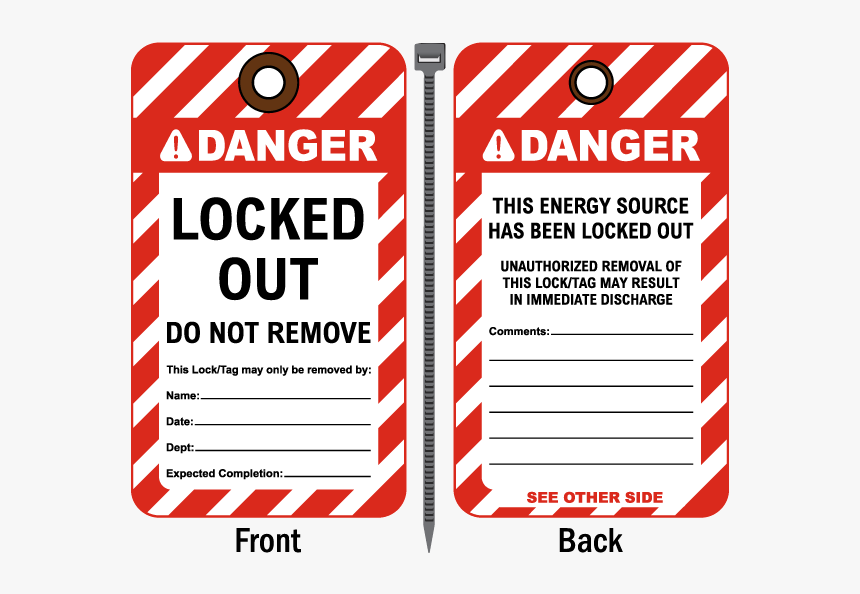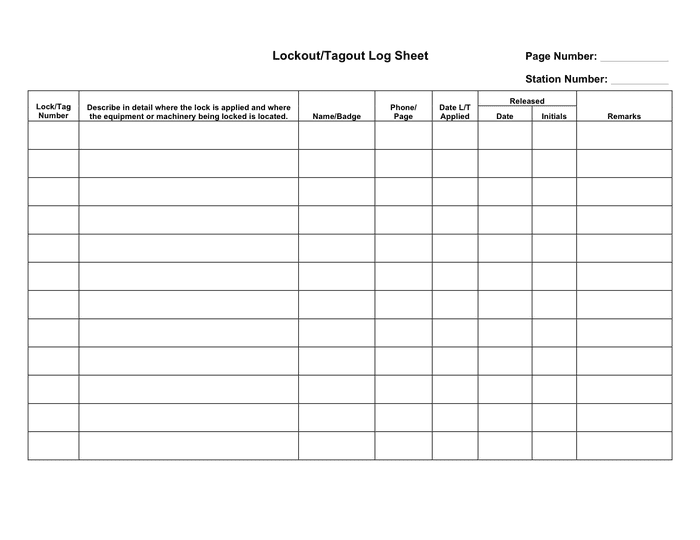
Every year, preventable industrial accidents occur because equipment is improperly serviced while still energized. The lockout tagout log sheet is not just another piece of paperwork—it’s a critical component of an effective energy control program. When a machine is locked and tagged, the log sheet becomes the official record of who did what, when, and why. Missing or poorly maintained logs erode accountability, increase risk, and expose facilities to regulatory penalties.
This guide dives deep into the practical role of the lockout tagout log sheet, from daily use and compliance requirements to real-world workflow integration.
Why a Lockout Tagout Log Sheet Matters More Than You Think
Many facilities treat the LOTO log sheet as a compliance checkbox—filled out hurriedly and filed away. But its real value lies in traceability and communication.
Consider this scenario: A maintenance technician locks out a conveyor system at 8:15 a.m. Two hours later, a production supervisor tries to restart the line, unaware maintenance is still underway. Without a current, visible log sheet, the risk of accidental energization skyrockets.
The log sheet acts as a communication bridge between shifts, teams, and departments. It records: - Equipment involved - Employee name and ID - Time of lock application and removal - Type of energy sources isolated (electrical, hydraulic, pneumatic, etc.) - Reason for service
When properly used, it creates an audit trail that protects workers and the organization.
OSHA Requirements and the Role of Documentation
The Occupational Safety and Health Administration (OSHA) standard 29 CFR 1910.147 mandates that facilities implement a written energy control program, including documentation of each servicing event. While the rule doesn’t explicitly say “log sheet,” it requires employers to document each application of energy control procedures—especially when multiple employees are involved or complex machinery is being serviced.
This is where the LOTO log sheet becomes non-negotiable. OSHA inspectors routinely ask for: - Records of lockout procedures - Employee training logs - Periodic inspections (at least annually) - Proof of employee understanding
A well-maintained log sheet satisfies part of these documentation duties. It also supports the “periodic inspection” requirement, where a supervisor must observe a full LOTO procedure and verify compliance. The log provides context: Was the lock applied correctly? Was the equipment properly verified de-energized?
Failure to maintain logs can result in citations. In 2022, a food processing plant was fined over $40,000 after an amputation incident—partly because no records existed to prove the energy isolation process had been followed.
What Should a Lockout Tagout Log Sheet Include?
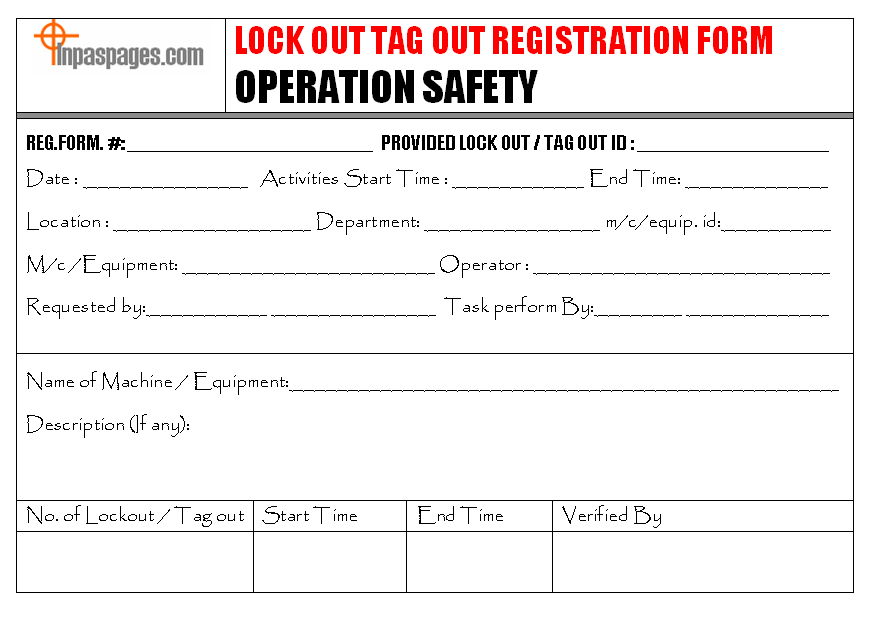
A generic template won’t cut it for complex environments. Your log sheet must capture enough detail to reconstruct events, yet remain practical for daily use. Here’s a breakdown of essential fields:
Core Fields Every Log Must Contain
- Date and Time (Lock Application & Removal)
- - Precision matters. Use 24-hour format to avoid confusion across shifts.
- Employee Name and ID
- - Not just first name—use full name and employee number for clarity.
- Equipment ID or Location
- - Use asset tags or standardized names (e.g., “Conveyor Line 3,” not “that big machine near the back”).
- Type of Energy Source(s)
- - List all: electrical, mechanical, hydraulic, pneumatic, thermal, chemical.
- Lock Number(s) Applied
- - Each lock should be uniquely numbered and assigned to one person.
- Reason for Lockout
- - Be specific: “Replace drive motor,” not “maintenance.”
- Verification of Isolation
- - A simple check box: “Tested for zero energy?”
- Supervisor Signature (for group lockouts)
- - Required when more than one person is involved.
Include space for notes—e.g., unexpected complications, parts ordered, or delays.
Common Mistakes That Undermine LOTO Logging
Even with the best templates, human error and workflow gaps can compromise log integrity. Watch for these recurring issues:
1. Blank or Incomplete Entries Leaving fields like “removal time” blank defeats the audit trail. Enforce a rule: no log, no work—and no departure until the log is fully signed off.
2. Retroactive Filling Writing logs at the end of the shift increases the risk of inaccuracies. Logs should be updated in real time.
3. Shared or Unassigned Locks
Using “team locks” without individual accountability violates OSHA’s one-person, one-lock rule. Every technician must apply their own lock and log it.
4. Poor Visibility Storing logs in binders behind an office door limits usefulness. Keep physical logs near the equipment or use digital systems accessible to supervisors.
5. Ignoring Group Lockout Procedures In team maintenance, the primary authorized employee must coordinate all locks and log entries. Skipping this step creates coverage gaps.
Digital vs. Paper Log Sheets: What Works Best?
The debate isn’t about technology—it’s about reliability and adoption. Both formats have strengths.
| Factor | Paper Log Sheets | Digital LOTO Logs |
|---|---|---|
| Setup Cost | Low | Moderate to high |
| Training Needs | Minimal | Requires onboarding |
| Real-Time Access | Limited | High (cloud-based) |
| Audit Trail Integrity | Prone to loss, damage | Immutable timestamps, user authentication |
| Integration with Systems | None | Can link to CMMS, ERP, or EHS platforms |
In high-turnover environments, digital systems reduce errors. A technician scans a QR code on a machine, logs their lock application via a mobile app, and the system auto-records timestamp, employee ID, and equipment.
But in remote or hazardous areas with poor connectivity, paper remains practical. The key is consistency—don’t mix systems unless they’re synchronized.
5 Reliable Lockout Tagout Log Sheet Templates and Tools
Here are five proven solutions used across industries:
1. OSHA-Compliant PDF Template (Free)
- Source: OSHA.gov and safety consortiums
- Pros: Print-ready, customizable, universally accepted
- Best for: Small to mid-sized operations on a budget
2. Creative Safety Supply LOTO Log
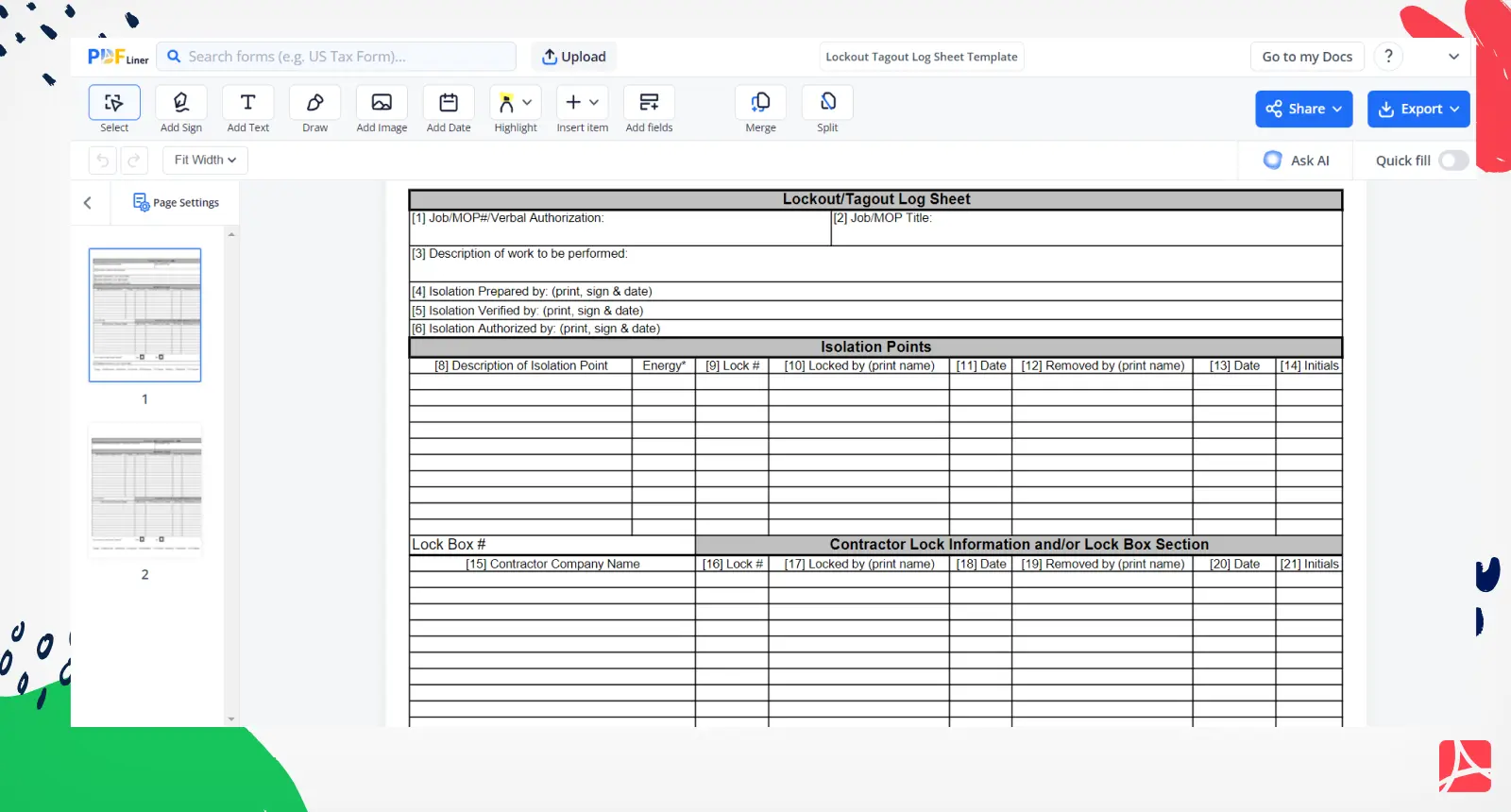
- Features pre-filled energy type checkboxes and dual-time fields
- Includes room for supervisor verification
- Available in pad or binder format
3. EHS Insight Platform (Digital)
- Cloud-based log management with mobile access
- Tracks lock history, overdue removals, and training status
- Integrates with incident reporting modules
4. Lockout Pro Mobile App
- Allows photo uploads of locks applied
- Sends alerts if a lock remains beyond a set timeframe
- Generates OSHA-ready audit reports
5. Custom In-House Template (Excel or Google Sheets)
- Fully tailored to facility-specific workflows
- Can include dropdowns for equipment and energy types
- Risk: inconsistent formatting across teams unless locked
Choose based on your team size, risk level, and existing systems. A 10-person workshop may thrive with paper; a 500-employee plant needs digital oversight.
How to Integrate LOTO Logs Into Daily Operations
A log sheet shouldn’t be an afterthought. Embed it into your workflow:
Step-by-Step Integration
- Pre-Work Briefing
- - Review affected equipment and assign locks.
- Log Before Lock
- - Fill in employee, equipment, and reason fields before applying the lock.
- Isolate and Verify
- - Shut down, isolate energy sources, then test for zero energy.
- Log Verification
- - Initial the “verified” field—this is non-negotiable.
- Post-Work Review
- - Remove lock only after work is complete, tools are cleared, and area is safe.
- Final Log Update
- - Record removal time and sign off.
Supervisors should spot-check 10% of logs weekly. Flag discrepancies immediately.
Real-World Example: How a Log Sheet Prevented a Major Incident
At a Midwest automotive parts plant, a technician began repairing a robotic arm. He applied his lock and logged the action at 7:45 a.m. An hour later, a second technician arrived to assist but didn’t check the log. He nearly re-energized the system—until the supervisor noticed the open log sheet and stopped him.
An investigation revealed the second tech wasn’t properly trained on log review. The facility revised its protocol: no lock removal unless the log is reviewed and signed by two authorized employees.
The log sheet didn’t just document the event—it became a teaching tool and process enforcer.
Final Thoughts: Treat the Log Sheet as a Living Safety Document
The lockout tagout log sheet is more than a compliance artifact. It’s a dynamic part of your safety culture. When maintained with discipline, it prevents accidents, supports training, and stands as legal proof of due diligence.
Don’t settle for a generic form downloaded from the web. Customize it to your operations, train your team on its importance, and audit its use regularly. Whether paper or digital, a well-used log sheet is the quiet guardian of your workplace safety program.
Start today: review your current LOTO log, identify gaps, and update it to reflect real-world needs. One missing signature could be the difference between a safe shutdown and a life-altering incident.
FAQ
What should you look for in Lockout Tagout Log Sheet: Essential Guide for Safety Compliance? Focus on relevance, practical value, and how well the solution matches real user intent.
Is Lockout Tagout Log Sheet: Essential Guide for Safety Compliance suitable for beginners? That depends on the workflow, but a clear step-by-step approach usually makes it easier to start.
How do you compare options around Lockout Tagout Log Sheet: Essential Guide for Safety Compliance? Compare features, trust signals, limitations, pricing, and ease of implementation.
What mistakes should you avoid? Avoid generic choices, weak validation, and decisions based only on marketing claims.
What is the next best step? Shortlist the most relevant options, validate them quickly, and refine from real-world results.