The body was never just flesh in the medieval world. In cathedrals, manuscripts, and mosaics, limbs were elongated, postures stiffened, and gestures codified—not for aesthetic flourish, but to anchor divine truth and royal authority into human form. Medieval art made the body a site where theology and politics converged, where every wound, halo, and crown carried doctrinal weight and dynastic claim.
This wasn’t accidental. It was engineered.
In an era where literacy was limited and divine right was absolute, visual art became the primary medium of ideological transmission. And the human body—distorted, idealized, or martyred—was its central vessel. From the rigid Christ of Byzantine icons to the emaciated saints in Gothic frescoes, physical form carried messages about sin, salvation, hierarchy, and obedience.
Let’s dissect how this worked—and why it still matters.
The Theological Body: Flesh as Divine Architecture
In medieval Christian doctrine, the body was both a prison of sin and a temple of the Holy Spirit. This paradox shaped artistic representation profoundly. Artists didn’t aim for anatomical realism; they sought spiritual clarity.
Take the Christ Pantocrator—the Ruler of All—common in Eastern Orthodox icons. His face is asymmetrical: one side serene, the other stern. Not a flaw, but theology rendered in pigment. It signifies Christ’s dual nature: human and divine, merciful and judging. The body here isn’t naturalistic—it’s a theological diagram.
Similarly, the Man of Sorrows image, popularized in the 13th century, depicted Christ not on the cross, but standing, eyes open, wounds exposed. His body, bloodied yet upright, became a living altar. Viewers weren’t meant to see a dying man, but the ongoing sacrifice—eternal, present, consuming.
These images weren’t just devotional. They instructed. They reminded the faithful that salvation wasn’t abstract—it was physical. Christ’s body, resurrected and glorified, promised the same for the believer. Yet this promise came with demands: humility, penance, obedience.
Artists used proportion to reinforce this. Saints were often larger than bystanders. The Virgin Mary, when present at the Crucifixion, stood taller, more centered. Scale signaled sanctity. The body’s position in space declared its spiritual rank.
And woe to those who disrupted the order.
The Political Body: Kingship Embodied and Enforced
If theology sanctified the body, politics exploited it. Medieval rulers understood that divine legitimacy was visual. To be seen was to rule.
Consider the Coronation of Charlemagne in the Benedictine Gospels. Charlemagne kneels, but his posture is rigid, his crown already implied. The Pope anoints him, yet the composition elevates the emperor—closer to the viewer, more central. The body here becomes a claim: this man rules by God’s will, not papal favor.
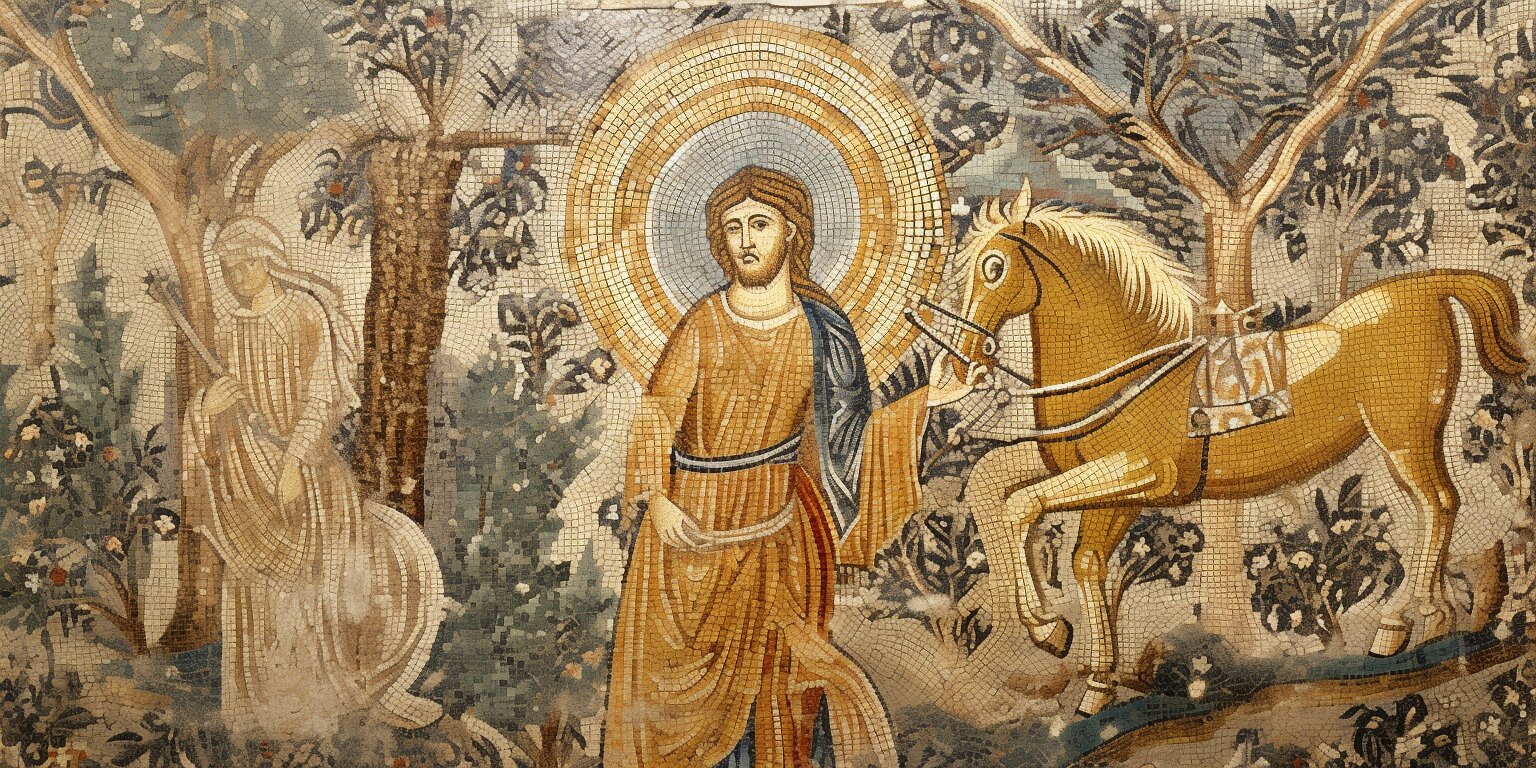
In Byzantine mosaics, emperors stood beside Christ or the Virgin, not as equals, but as chosen stewards. In the Church of San Vitale, Ravenna, Emperor Justinian appears in a rigid frontal pose, holding a golden paten. His body, flanked by clergy and soldiers, forms a bridge between heaven and earth. The message: imperial power is sacral, unchallengeable.
These weren’t portraits. They were proclamations.
Even in death, the body served politics. Royal tombs featured gisants—recumbent effigies of kings and queens, eyes open, hands clasped in prayer. They didn’t look dead. They looked vigilant. Eternal. Their bodies, carved in stone, continued to occupy space, to assert lineage, to legitimize successors.
And when bodies were absent, they were invented. Relics—bones, teeth, fragments of cloth—were displayed in elaborate reliquaries shaped like arms, heads, or full figures. The Sainte-Chapelle in Paris housed Christ’s Crown of Thorns in a body-shaped container. The relic wasn’t just preserved; it was re-bodied. And where the body of Christ was, so was power.
Martyrdom and the Body as Resistance
Not all bodies in medieval art served authority. Some defied it.
Martyrs were a special category. Their bodies, tortured and broken, became weapons against oppression. In the Golden Legend, a 13th-century compendium of saints’ lives, martyrs endure dismemberment, boiling, and stoning—but never flinch. Their pain is not weakness; it is triumph.
St. Lawrence, roasted on a gridiron, is often shown smiling, turning to his executioners: “I’m done on this side—turn me over.” His body, in art, is not grotesque but radiant. The flames don’t consume him; they purify.
These depictions were subversive. They reminded viewers that earthly rulers could destroy flesh, but not faith. The martyr’s body became a site of resistance—a testament that divine law superseded imperial decree.
But the Church also contained this resistance. Martyrs were always shown under divine protection. Angels gathered their souls. Halos crowned their heads. The message: suffering was holy, but revolution was not. The body could bleed, but only to reinforce orthodoxy.
Gender, the Body, and Sacred Control
The female body in medieval art was tightly policed—both sanctified and suppressed.
The Virgin Mary was the ideal: passive, pure, eternally fertile yet perpetually virgin. In Annunciation scenes, she recoils slightly, hand raised—not in fear, but in modest acceptance. Her body is enclosed, draped in blue, a symbol of heavenly grace. She bears God, but never dominates the narrative.
Compare this to Eve. In frescoes of the Fall, she is often larger than Adam, reaching greedily for the fruit. Her body is twisted, exposed. In some Romanesque carvings, she’s even shown coupling with the serpent. The female body, in this context, is the origin of sin—a threat to be controlled.
Yet female saints complicated this. St. Agnes, martyred at 12, is shown with long, uncovered hair—a symbol of virginity. St. Catherine of Alexandria, learned and defiant, breaks the wheel of torture with a glance. Their bodies, though female, are made safe through suffering and submission.
Even mystics like Hildegard of Bingen, who claimed divine visions, were depicted in ways that neutralized their power. In her Scivias manuscripts, she receives visions, but always under the protection of male clergy. Her body is small, seated, receiving—not commanding.
The female form could be holy, but only when it didn’t challenge hierarchy.
Disability and the Body as Divine Sign
Medieval art rarely depicted disability realistically—except when it served theology.
The blind, the lame, and the possessed appeared frequently—not as individuals, but as narrative devices. Christ heals them to prove divinity. In the Healing of the Paralytic at the Baptistère Saint-Louis, the man is shown mid-rise, body twisted, hand reaching toward Christ. His disability isn’t described; it’s a placeholder for sin.
Once healed, he vanishes from the story. His body mattered only in its brokenness—and its restoration by divine will.
But some disabilities were revered. Stigmata, the wounds of Christ, appeared on mystics like St. Francis. His body, marked with holy wounds, became a living icon. Paintings show him weeping, arms outstretched, blood dripping—less a man, more a sacrament.

Here, disability was not shameful. It was sacred. But only if divinely ordained. The peasant born with a limp was invisible. The saint who bled from the hands was immortalized.
The body’s value depended on who controlled its narrative.
Artistic Conventions That Enforced Meaning
Medieval artists weren’t ignorant of anatomy. They chose not to use it.
The hierarchical scale, where important figures were larger, wasn’t a mistake—it was doctrine. The frontal pose, with figures staring directly at the viewer, created a sense of presence, of confrontation. The gold background, rejecting depth, lifted scenes from earthly space into the eternal.
Color coded theology. Mary wore blue (expensive, celestial). Judas wore green (decay, envy). Red meant both divine love and martyrdom.
And space was moral. In Last Judgment frescoes, the saved ascended on the left (Christ’s right), the damned fell on the right. The body’s direction—up or down—determined its fate.
These weren’t artistic limitations. They were tools of persuasion.
A 12th-century viewer in a dimly lit church didn’t “read” these images. They experienced them. The body in art didn’t represent truth—it was truth.
The Legacy: When Bodies Still Speak for Power
The medieval fusion of body, theology, and politics didn’t vanish with the Renaissance.
Look at state funerals, where leaders lie in state—bodies posed as if in peaceful sovereignty. Observe royal coronations, where crowns are placed on heads in ceremonies echoing Charlemagne’s. Even modern propaganda uses bodily imagery: the strong leader, the suffering victim, the pure heroine.
And in religious art, the legacy continues. Icons in Eastern churches still follow Byzantine rules. Crucifixes emphasize wounds, not anatomy. The body remains a vessel of meaning.
But today, we question those meanings.
Feminist scholars dissect Marian imagery. Disability activists challenge the “healing narrative.” Postcolonial critics expose how European art imposed sacred bodies on colonized peoples.
The medieval body in art wasn’t neutral. It was a battleground.
And it still is.
Medieval art didn’t just depict the body—it weaponized it. Through distortion, symbolism, and sacred staging, artists turned human form into a declaration of divine order and political dominance. To understand these images is not to admire technique, but to decode power.
If you walk into a cathedral today, don’t just look at the saints. Watch their hands, their posture, their wounds. The body is still speaking.
And it’s saying more than you think.
FAQ
Why were medieval bodies so stiff and unrealistic? Artists prioritized spiritual meaning over realism. Rigid poses conveyed dignity, sanctity, and divine order, not anatomical accuracy.
How did politics influence religious art? Rulers commissioned artworks that showed them alongside saints or Christ to legitimize their power as divinely ordained.
What role did relics play in medieval body imagery? Relics transformed abstract holiness into physical presence. Reliquaries shaped like body parts made the sacred tangible and controllable.
Were disabled people represented fairly in medieval art? Rarely. Disability was usually shown as a condition to be healed, reinforcing the idea that physical perfection reflected spiritual purity.
How was the Virgin Mary’s body used symbolically? Her body represented purity, divine motherhood, and passive obedience—idealized to contrast with Eve’s sinful embodiment.
Did female saints challenge gender norms? Some did in life, but art often contained their power by emphasizing martyrdom, humility, or divine intervention.
Can we still see this fusion of body, religion, and power today? Yes—in state ceremonies, religious iconography, and political imagery that uses the body to convey authority or sacrifice.
FAQ
What should you look for in Medieval Art and the Body as Sacred Political Statement? Focus on relevance, practical value, and how well the solution matches real user intent.
Is Medieval Art and the Body as Sacred Political Statement suitable for beginners? That depends on the workflow, but a clear step-by-step approach usually makes it easier to start.
How do you compare options around Medieval Art and the Body as Sacred Political Statement? Compare features, trust signals, limitations, pricing, and ease of implementation.
What mistakes should you avoid? Avoid generic choices, weak validation, and decisions based only on marketing claims.
What is the next best step? Shortlist the most relevant options, validate them quickly, and refine from real-world results.