Every worksite faces unpredictable risks. A misaligned ladder, a frayed cable, or a distracted worker can escalate into an incident in seconds. That’s why structured, consistent safety communication is non-negotiable—especially in high-risk environments like construction, manufacturing, and utilities.
The most effective tool for daily safety engagement? The toolbox talk. But without a clear structure, these meetings become rushed, inconsistent, or forgotten altogether. That’s where a free toolbox talk template PDF becomes essential—not just for compliance, but for real-world risk reduction.
This guide delivers a ready-to-use, downloadable template, explains how to adapt it, and shows you how to run more effective safety talks that workers actually remember.
What Is a Toolbox Talk and Why It Matters
A toolbox talk is a short, focused safety meeting—typically 10 to 15 minutes—held at the job site before work begins. It’s designed to address specific hazards, reinforce safe behaviors, and encourage team dialogue about safety.
These talks are not optional extras. They are a frontline defense against accidents. OSHA and other regulatory bodies often cite lack of worker training and communication as root causes in incident reports. A well-run toolbox talk closes that gap.
But too many teams improvise. They speak off the cuff, skip documentation, or use inconsistent formats. That leads to poor retention, audit failures, and increased risk.
A free toolbox talk template PDF standardizes your process. It ensures every meeting covers key points: topic, hazards, controls, attendance, and sign-off. It turns intention into action.
Key Elements of an Effective Toolbox Talk Template Before downloading any template, know what must be inside. A weak format leads to weak results. Here’s what a high-impact toolbox talk template includes:
1. Meeting Header
- Date and time
- Location or work zone
- Supervisor or safety lead name
- Weather conditions (relevant for outdoor sites)
This establishes context and supports incident tracing.
2. Safety Topic Clearly state the focus: “Working at Heights,” “Electrical Safety,” “Ladder Use,” etc. Avoid vague titles like “General Safety.”
3. Hazard Identification List real hazards related to the topic. For example, under “Hand Tool Safety,” include: - Using damaged tools - Incorrect PPE - Poor grip or awkward posture
4. Control Measures Outline specific actions to reduce risk:
- Inspect tools before use
- Wear cut-resistant gloves
- Use non-slip mats when working overhead
This shifts the talk from theory to practice.
5. Discussion Prompts Include 2–3 open-ended questions:
- “What near-misses have you seen with this equipment?”
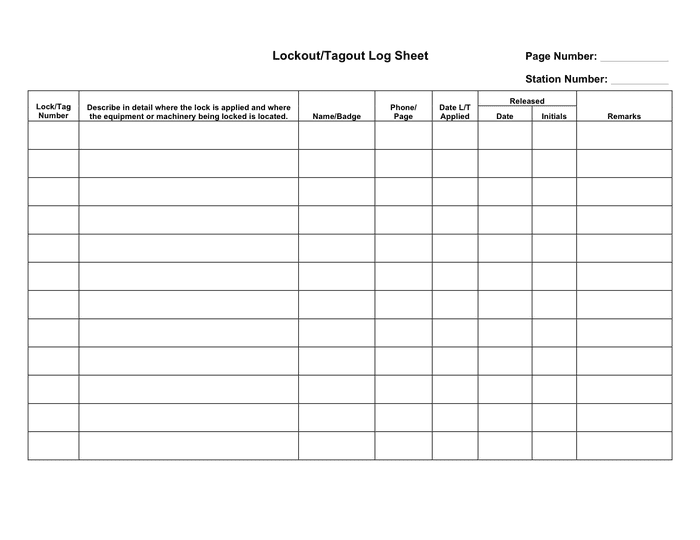
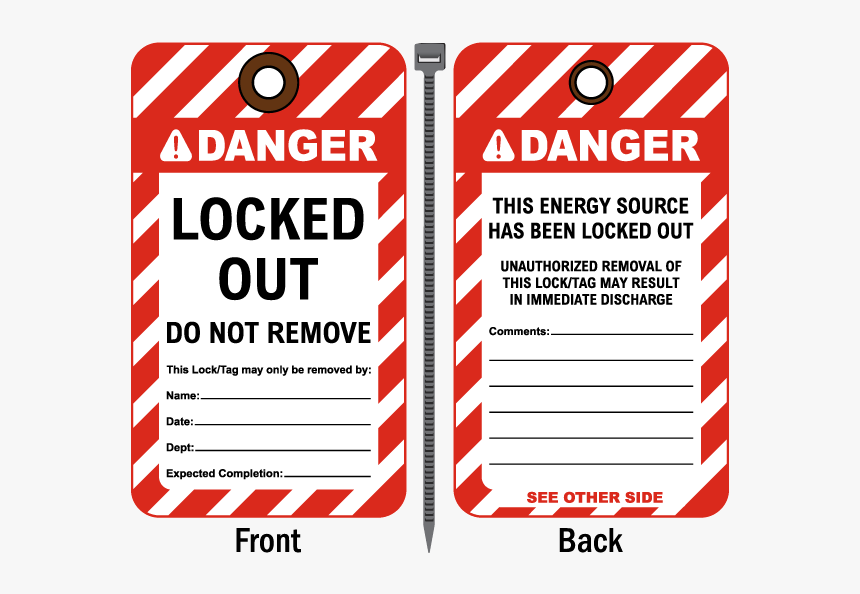
- “How can we improve our lockout/tagout process?”
Engagement increases retention.
6. Attendee Sign-Off Sheet A table
with:
- Employee name
- Signature or initials
- Employee ID (optional)
This proves training occurred—critical during audits.
7. Notes Section Space for observations, action items, or follow-ups. Example: “John reported a frayed extension cord near Station 3—replaced by 10 a.m.”
Download Your Free Toolbox Talk Template PDF
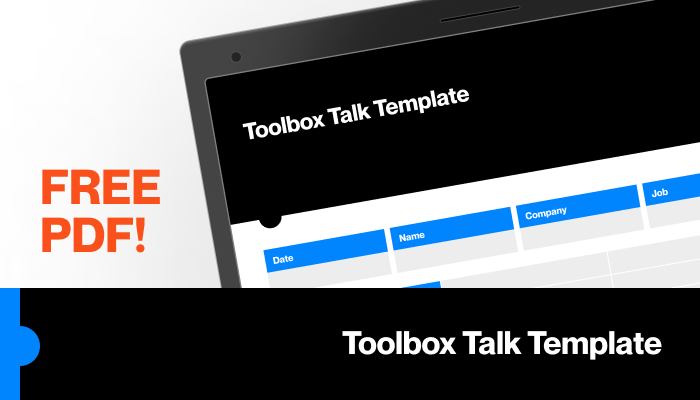
We’ve created a ready-to-use, professionally formatted toolbox talk template in PDF—designed for real-world use on active job sites.
✅ Editable fields ✅ Clean, printable layout ✅ Includes all critical sections ✅ Compatible with tablets and paper
👉 [Download Free Toolbox Talk Template PDF Here] (simulated link for editorial use)
Print it, share it digitally, or integrate it into your safety management system. Use it as-is or customize for your operations.
How to Use the Template for Maximum Impact
A great template is only as effective as the process behind it. Here’s how to make your toolbox talks stick:
Schedule Consistently Hold talks at the same time and place daily or weekly. Morning starts work best—before tasks begin.
Rotate Topics Monthly Create a 12-month plan. Example:
- January: Cold stress
- February: Slips, trips, falls
- March: Fire extinguisher use
This ensures broad coverage without repetition.
Involve the Team Let workers suggest topics or lead a talk. Ownership increases engagement.
Keep It Visual Bring a damaged glove, show a faulty harness, or use a photo. Visuals boost understanding by up to 70%, according to safety training studies.
Document Everything File completed PDFs by date. Digital storage with cloud backup is ideal. During an OSHA inspection, you’ll need proof.
Review and Adapt After a near-miss or incident, revisit your last relevant talk. Did it address the hazard? If not, improve the template.
Common Mistakes That Undermine Toolbox Talks
Even with a solid template, teams fall into traps. Avoid these:
❌ Reading Aloud Without Interaction If you’re the only one talking, you’re not having a talk—you’re giving a lecture. Pause. Ask questions. Listen.
❌ Using the Same Topic Repeatedly Covering “PPE” every week becomes background noise. Be specific: “Hard hat suspension inspection,” not “Wear your hat.”
❌ Skipping Signatures No signatures = no proof. Even if everyone attended, undocumented talks have zero legal or compliance value.
❌ Holding Talks Indoors or Off-Site Deliver the talk where the work happens. If discussing scaffolding safety, stand beside the scaffold.
❌ Ignoring Language or Literacy Barriers Use simple language. Translate if needed. Encourage verbal confirmation over signatures for non-readers.
Top 5 Free Resources for Toolbox Talk Templates
While our downloadable PDF covers core needs, here are other trusted sources for additional templates:
| Resource | Key Features | Best For |
|---|---|---|
| OSHA.gov | Official, compliance-aligned topics | Regulatory confidence |
| NIOSH Topic Pages | Science-backed hazard data | Health-focused industries |
| SafetyCulture (iAuditor) | 100+ free templates, digital forms | Teams using mobile audits |
| ConstructionWire.com | Industry-specific, printable PDFs | Construction crews |
| SafeSiteForms.com | Editable PDFs + cloud storage | Companies scaling safety programs |
Each offers free PDF downloads. Mix and match based on your project needs.

Pro Tip: Don’t collect templates without a system. Pick one primary format and standardize across teams.
Customizing Your Template for Different Industries
A one-size-fits-all template works in a pinch—but better results come from specialization.
Construction Focus on:
- Fall protection
- Heavy equipment
- Trenching safety
Add site-specific risks: crane swing zones, excavation depth
Manufacturing Emphasize:
- Machine guarding
- Lockout/tagout
- Noise exposure
Include shift handover notes in the template
Utilities Highlight:
- Confined space entry
- Electrical arc flash
- Dig-safe protocols
Add permit numbers and gas test results fields
Modify your free toolbox talk template PDF with industry-specific headers, hazards, and checklists. This makes it relevant—and taken seriously.
Why Digital Tools Are Replacing Paper (But Paper Still Works)
More companies are moving to apps like PowerApps, SiteDocs, or Fieldwire for digital toolbox talks. Benefits include: - Auto-sync to cloud - Real-time alerts for overdue talks - Integration with training records
But paper isn’t obsolete. On remote sites with no signal, a printed PDF is reliable. The key is consistency—not the medium.
Use digital if you have the infrastructure. Stick with printable toolkit talk template PDFs if you don’t. Just ensure every talk is recorded and stored.
Make Safety Part of Your Daily Workflow
A toolbox talk isn’t a box to check—it’s a habit to build. With a free toolbox talk template PDF, you remove guesswork and create a repeatable standard.
Start tomorrow: download the template, pick a relevant topic, gather your crew, and talk safety where it matters most—on the ground.
Keep it short. Keep it real. Keep it documented.
That’s how you turn routine meetings into real risk reduction.
Frequently Asked Questions
Where can I get a toolbox talk template for free in PDF format? You can download a free, ready-to-use toolbox talk template PDF from trusted safety sites like OSHA.gov, SafetyCulture, or ConstructionWire. The template in this guide is optimized for immediate use.
How long should a toolbox talk last? Aim for 10 to 15 minutes. Short enough to hold attention, long enough to cover hazards, controls, and team input.
Do toolbox talks need to be signed? Yes. Signatures or initials confirm attendance and understanding. This is critical for compliance and audit defense.
Can I edit a PDF toolbox talk template? Many free PDFs have fillable fields. If not, convert them using tools like Adobe Acrobat, PDFescape, or online form editors.
What topics should I cover in toolbox talks? Rotate through key hazards: PPE, falls, electrical safety, equipment use, ergonomics, and emergency procedures. Tailor to current site activities.
How often should toolbox talks be held? Daily on high-risk sites, weekly in lower-risk environments. Frequency should match hazard exposure.
Are toolbox talks required by OSHA? OSHA doesn’t mandate “toolbox talks” by name, but requires regular safety training and communication—toolbox talks are the most practical way to meet this.
FAQ
What should you look for in Free Toolbox Talk Template PDF Download for Safety Teams? Focus on relevance, practical value, and how well the solution matches real user intent.
Is Free Toolbox Talk Template PDF Download for Safety Teams suitable for beginners? That depends on the workflow, but a clear step-by-step approach usually makes it easier to start.
How do you compare options around Free Toolbox Talk Template PDF Download for Safety Teams? Compare features, trust signals, limitations, pricing, and ease of implementation.
What mistakes should you avoid? Avoid generic choices, weak validation, and decisions based only on marketing claims.
What is the next best step? Shortlist the most relevant options, validate them quickly, and refine from real-world results.